A private 14-day loop through Morocco, from Marrakech across the High Atlas and the Sahara to the imperial cities, the Rif Mountains, and the Mediterranean coast. Ride camels into Erg Chebbi at sunset, sleep two nights in a deep-desert camp, walk the medinas of Fez and Chefchaouen, hike the Akchour valley, and follow the coast through Tetouan and Tangier before returning via Rabat and Casablanca. Meals, accommodation, camel treks, guided tours, and a private driver throughout. This is the full Morocco; desert, mountains, coast, and city, paced so nothing feels rushed and nothing is missed.
Day 1: Marrakech – guided day of three sites
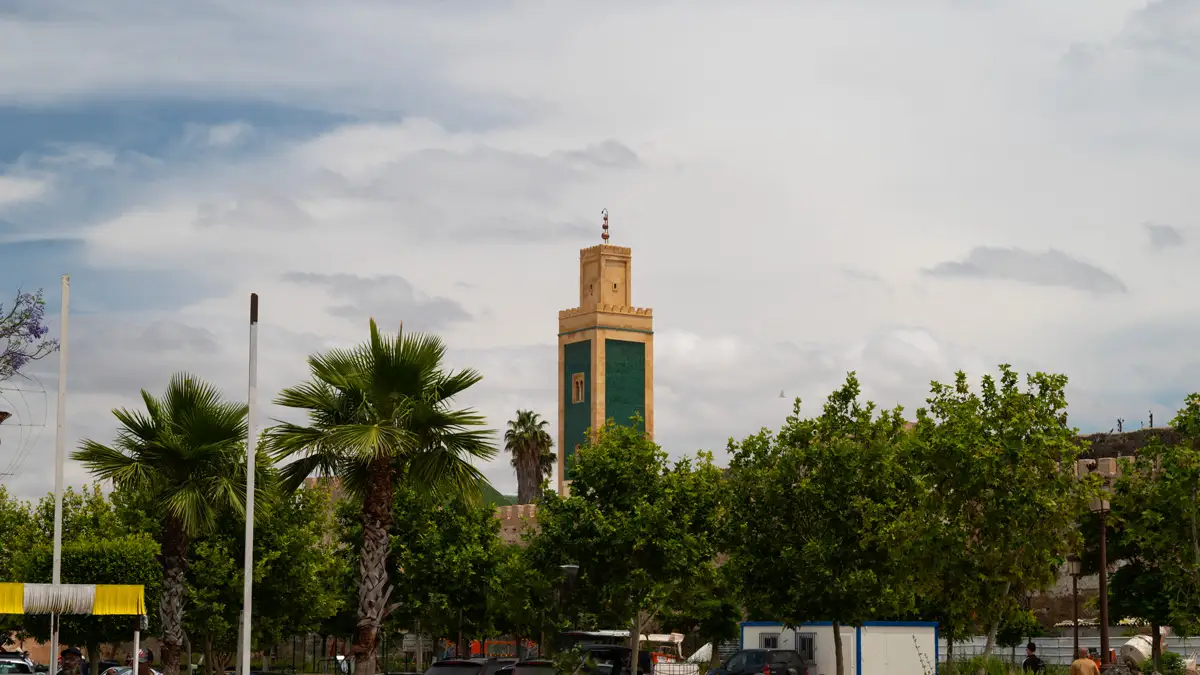
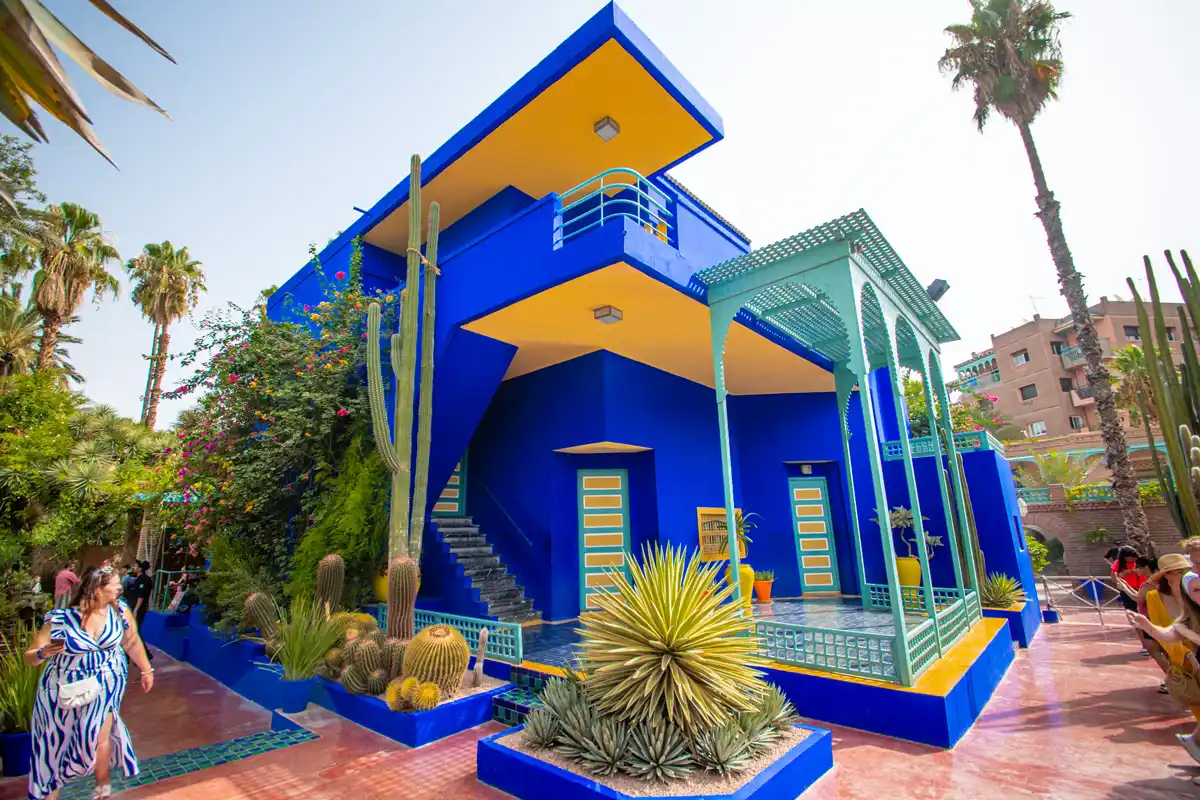
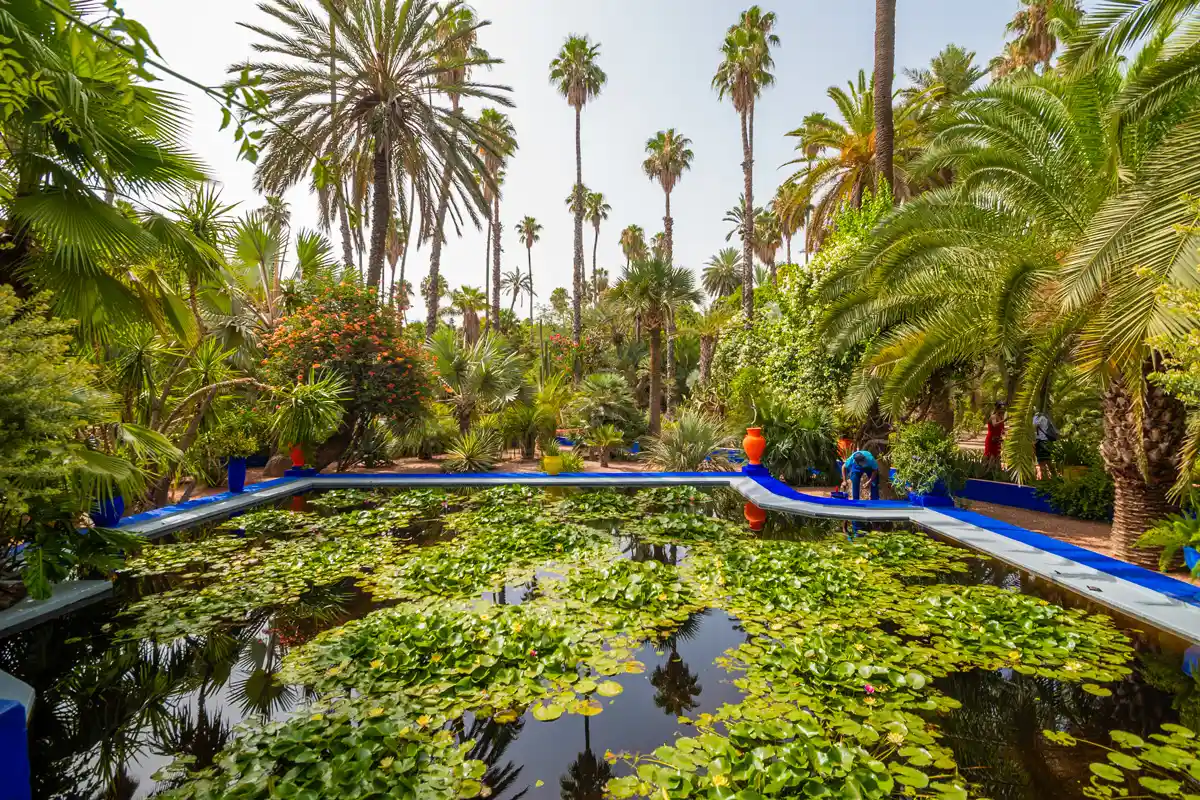
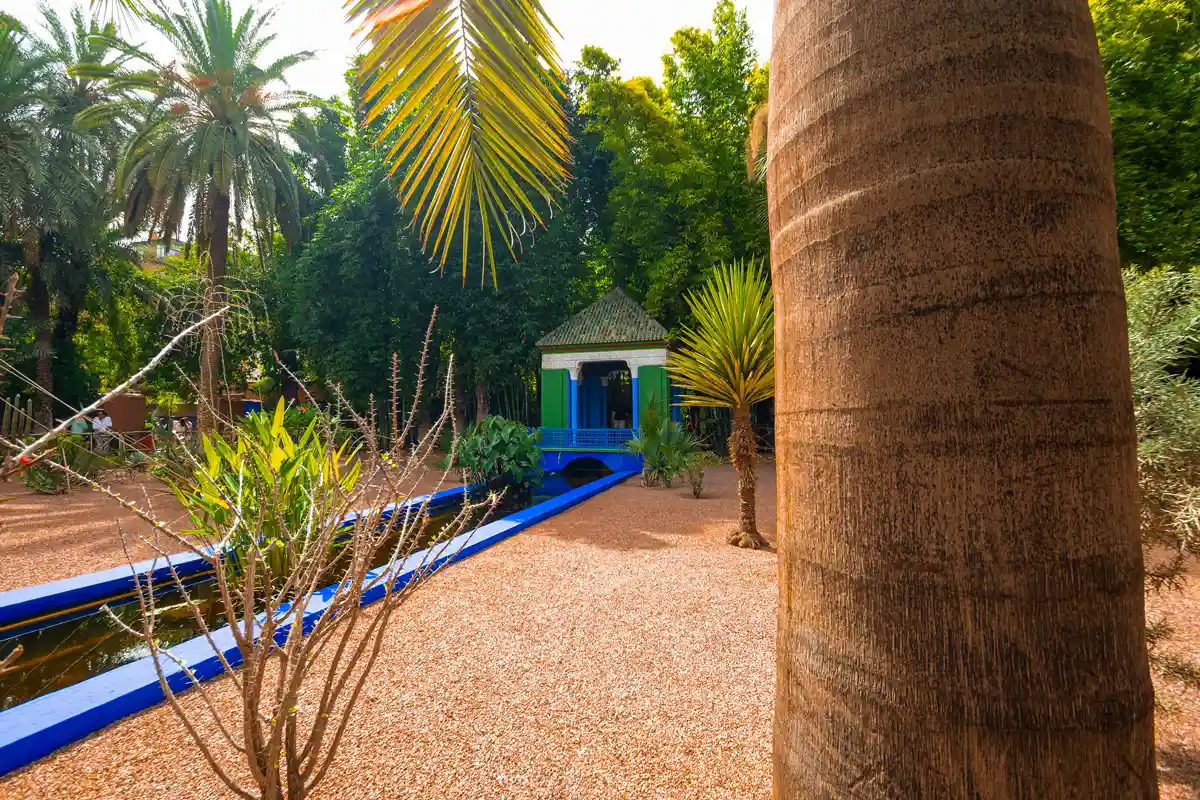
We recommend starting at Jardin Majorelle in the first hour after opening, because the garden is cooler then and the blue walls read better before the midday glare; continue to the Saadian Tombs, the 16th-century royal burial site that stayed sealed until 1917, which is why the plasterwork survived intact; lunch in the medina; afternoon at the Koutoubia Mosque and its 77-metre minaret, the model for the towers of Rabat and Seville; evening free at Jemaa el-Fna, which we suggest you see after dark, when the food stalls, storytellers and musicians take over the square; overnight in a riad in Marrakech.
Day 2: Marrakech – guided day of three sites
Le Jardin Secret, the restored 19th-century palace garden, where the old khettara channels still feed the beds; Bahia Palace, or El-Badii Palace if you prefer open ruins to ornament; lunch in the medina; afternoon in the souks for spices, carpets, lanterns, ceramics and leather, with time to walk the old medina at your own pace; free evening at Jemaa el-Fna; overnight in Marrakech.
Day 3: Marrakech to Ouarzazate
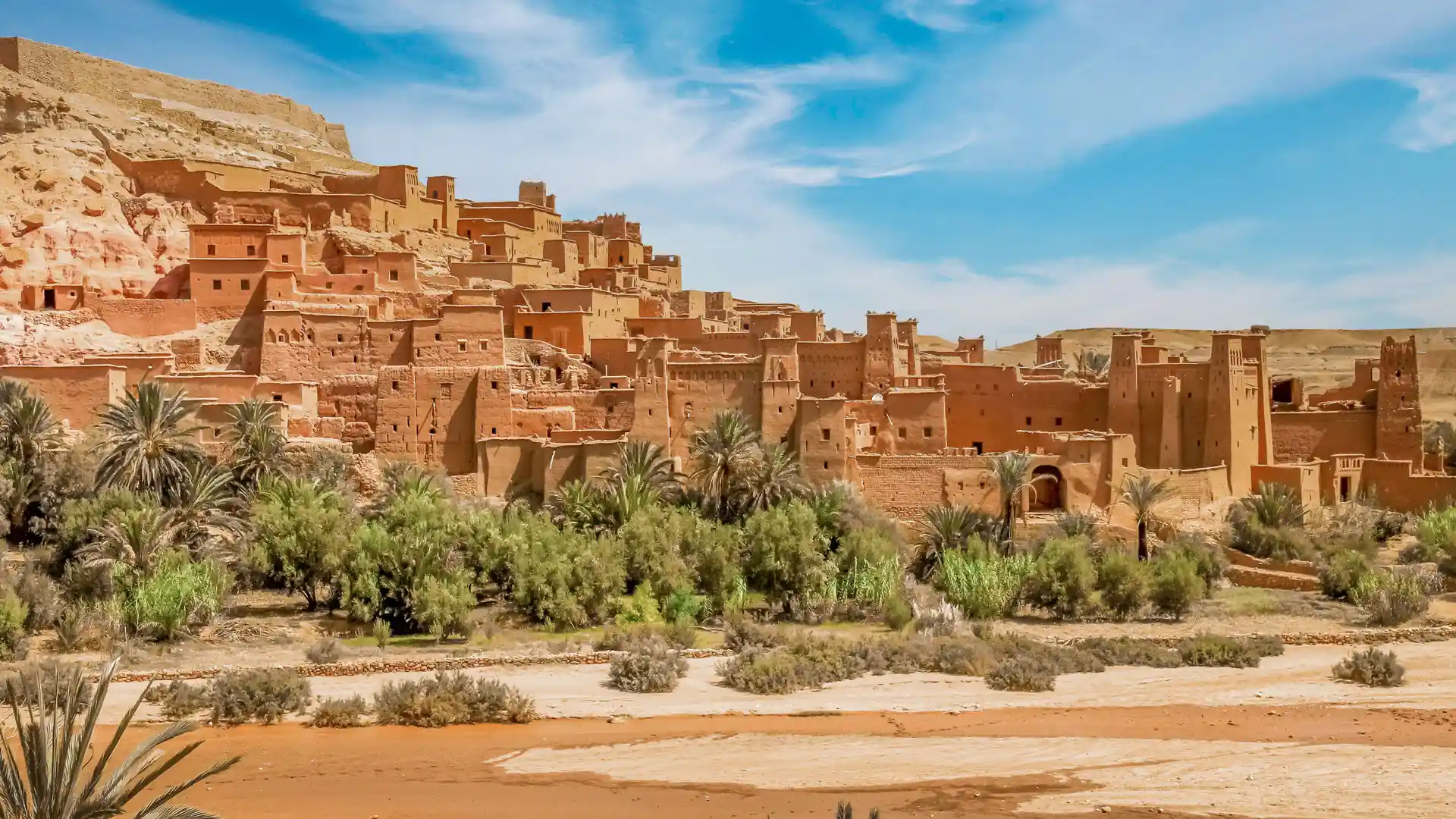
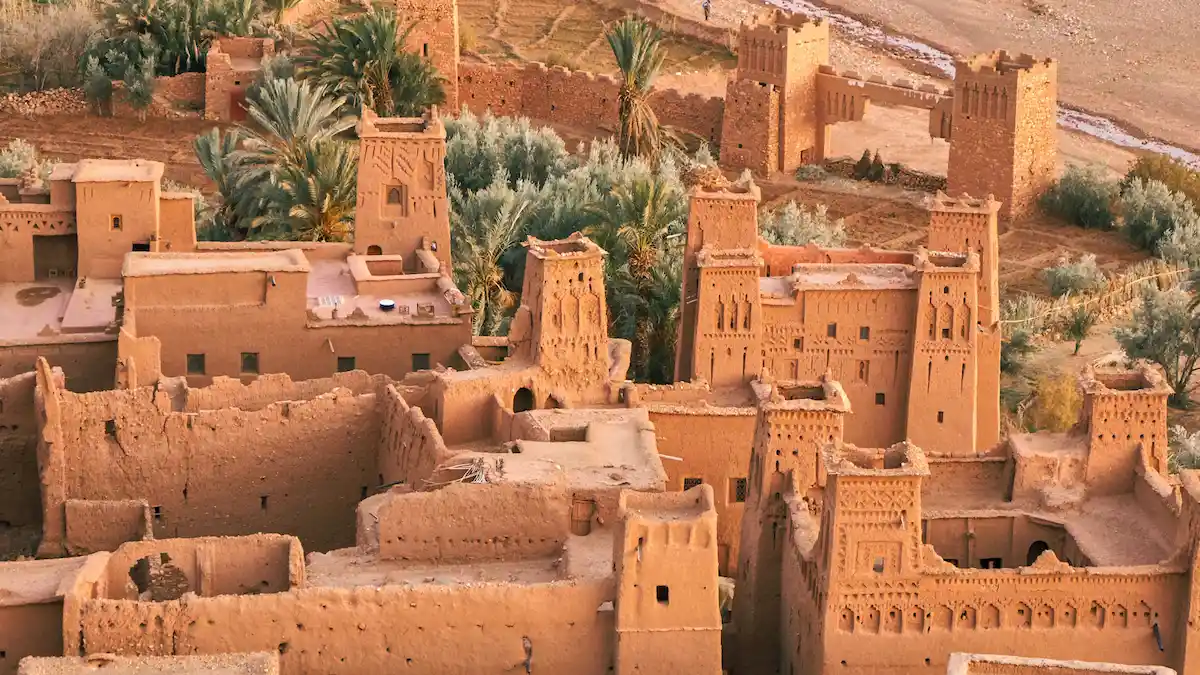
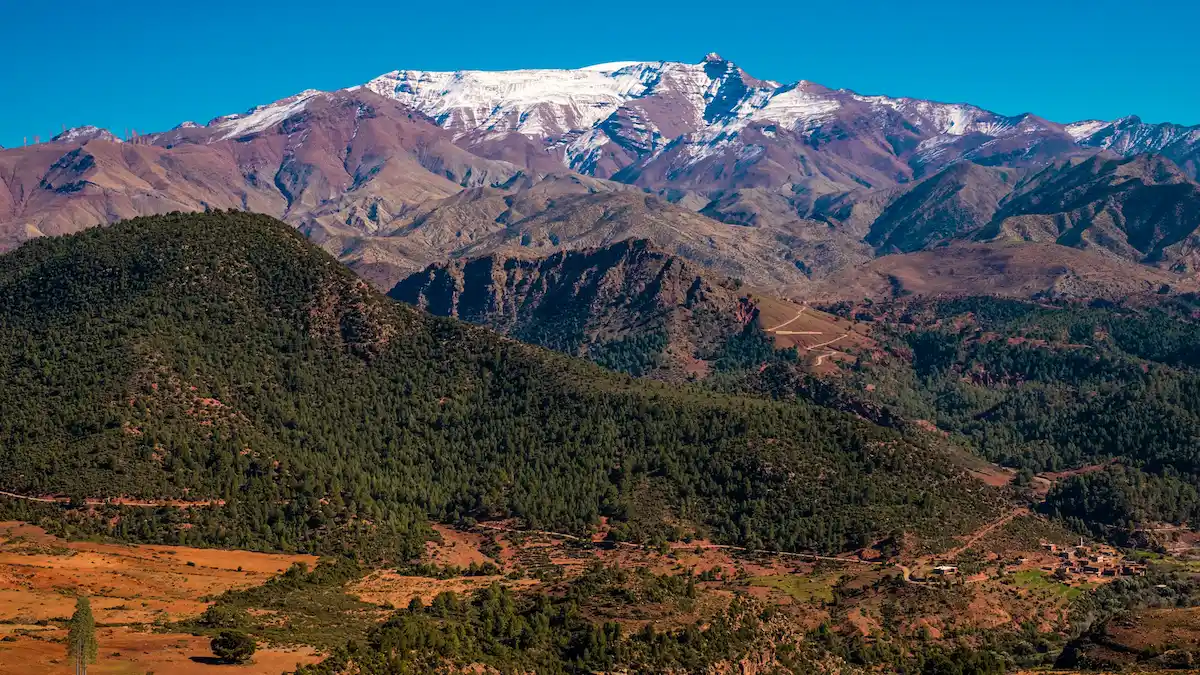
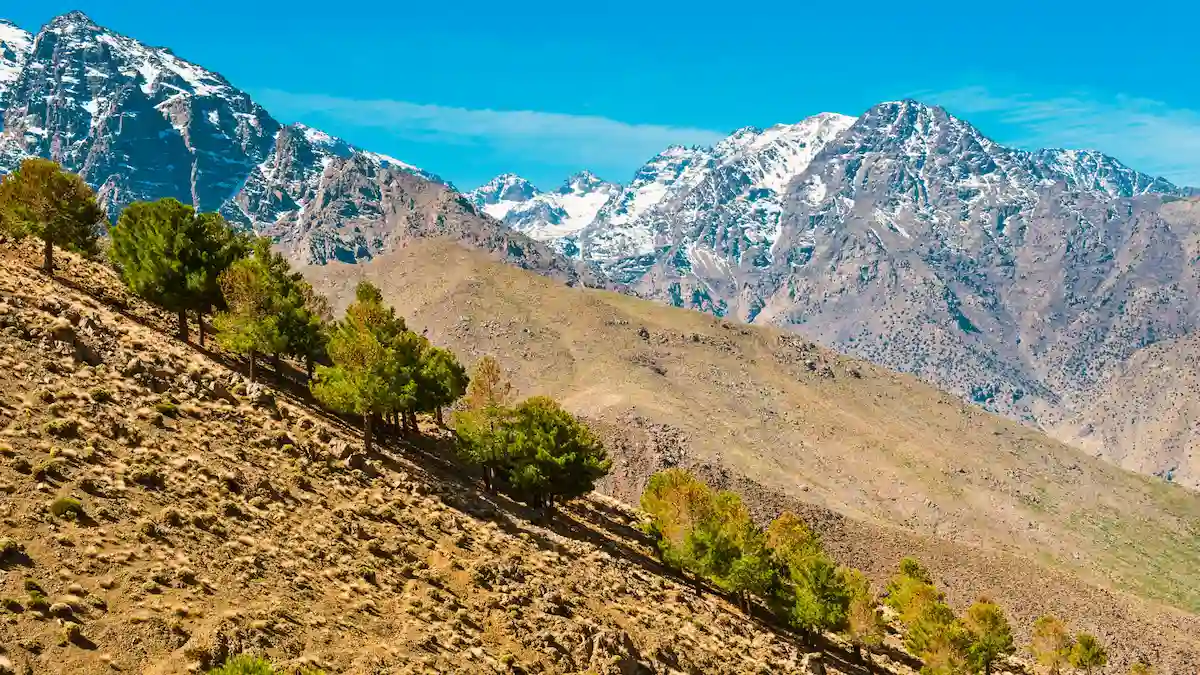
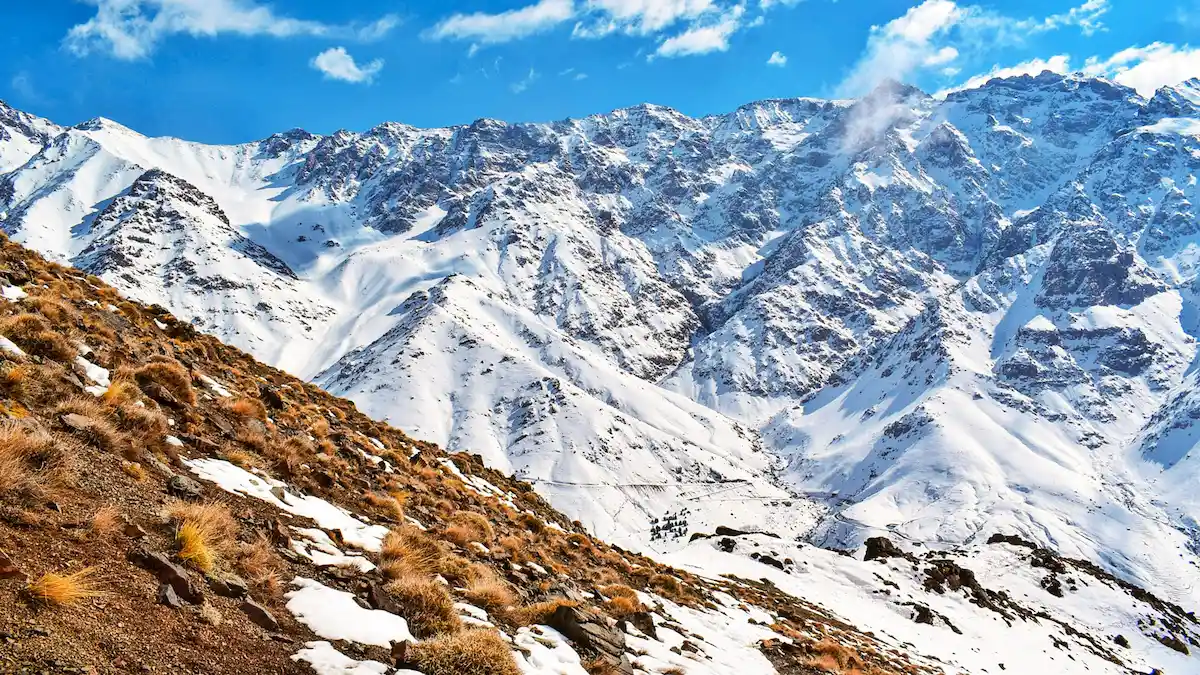
Leave early and climb into the High Atlas on the Tizi-n-Tichka pass at 2,260 metres, highest paved pass on Morocco’s main road network; we recommend stopping at the roadside mineral and fossil stalls near the summit, the quartz and ammonites are real and the prices are fair, so bring small cash; continue to Ait Ben Haddou for a guided walk through the ksar, where a local guide explains how Berber families built the earthen towers to defend the caravan route; you will recognise it from Gladiator and Game of Thrones; lunch near the ksar; afternoon visit to the Taourirt Kasbah in Ouarzazate; dinner in town; overnight in a lodge in Ouarzazate.
Day 4: Ouarzazate to Merzouga
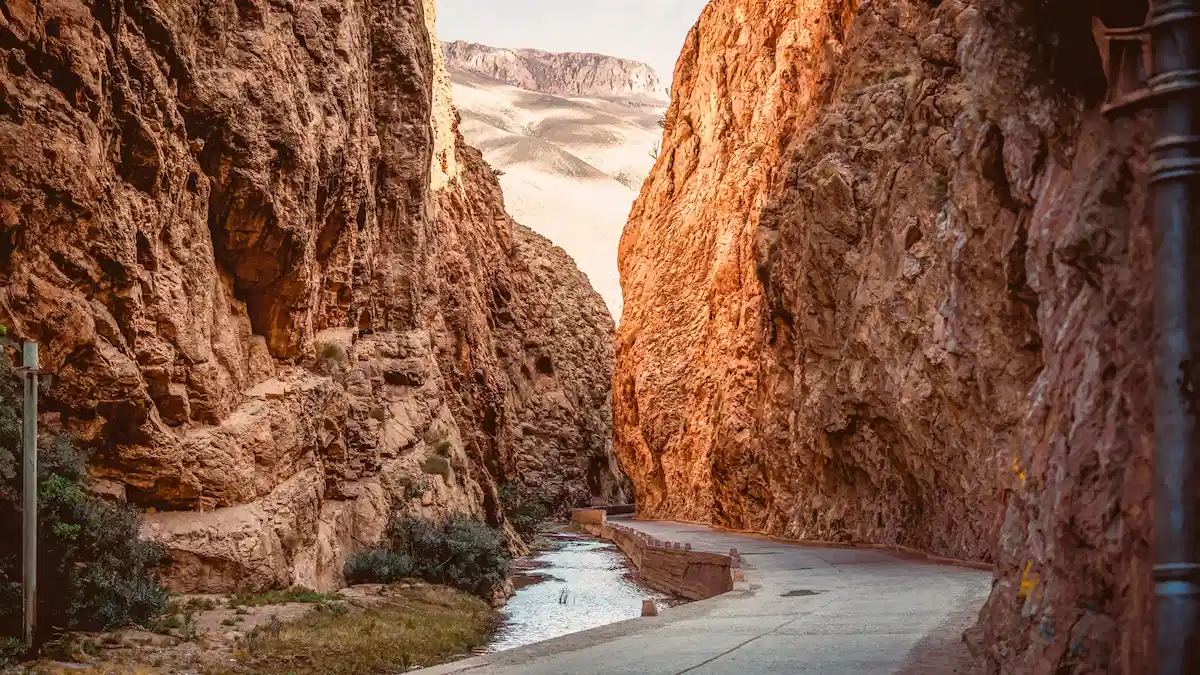
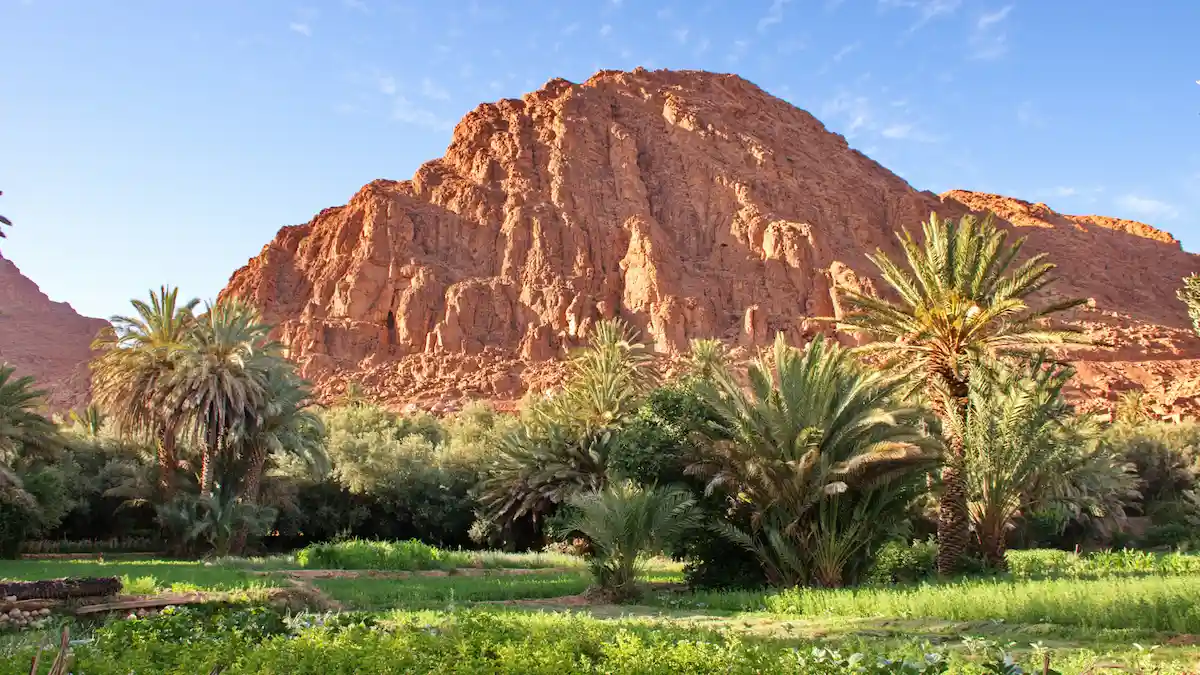
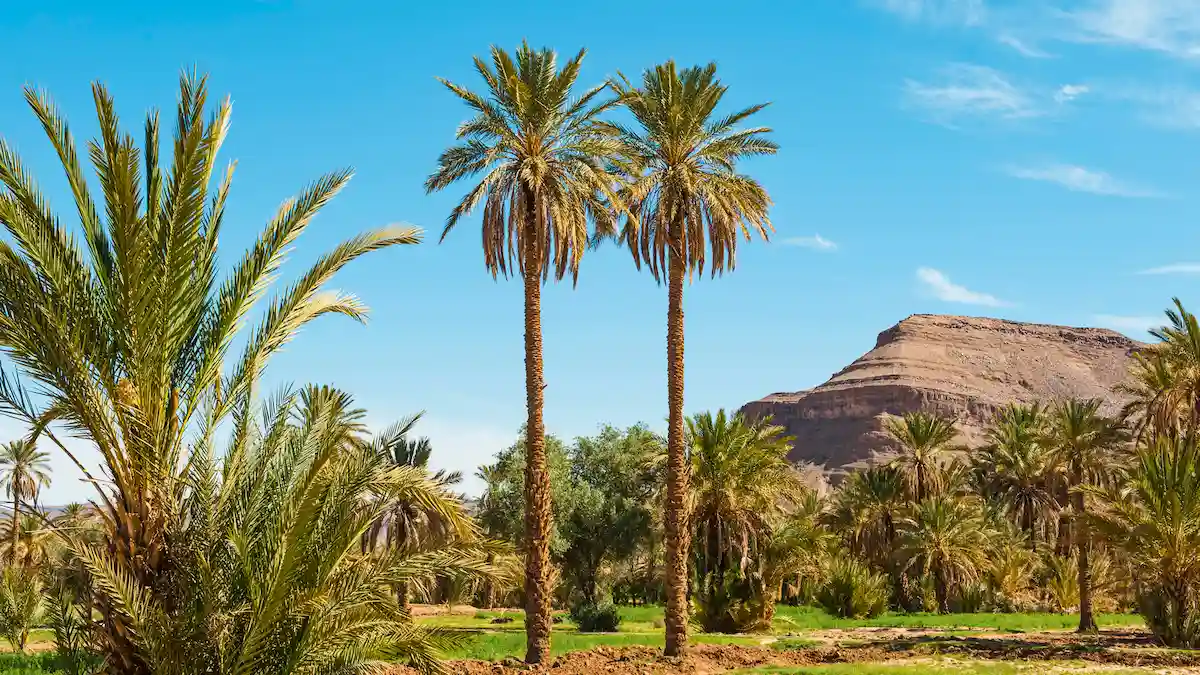
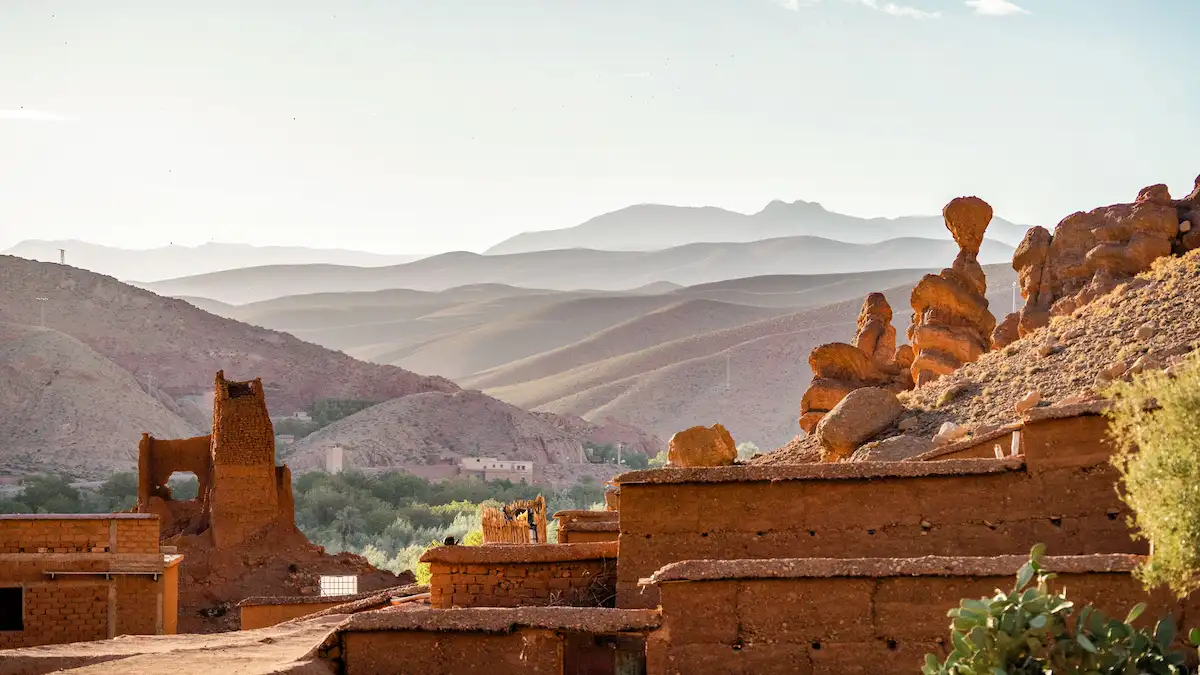
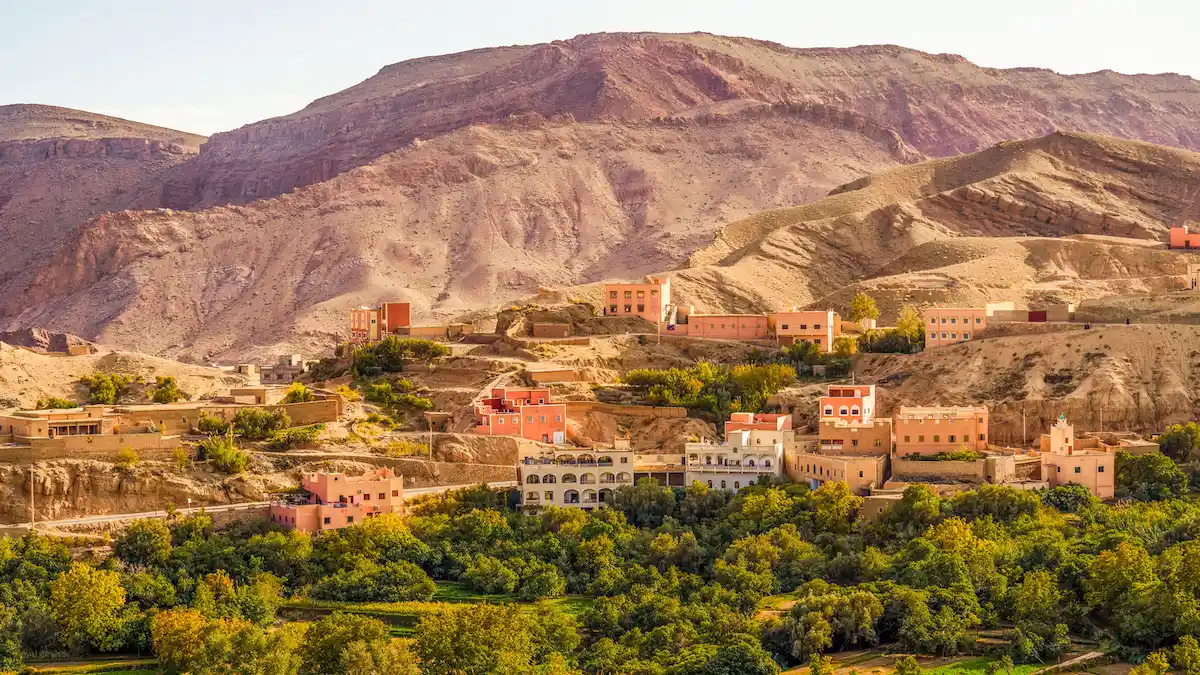
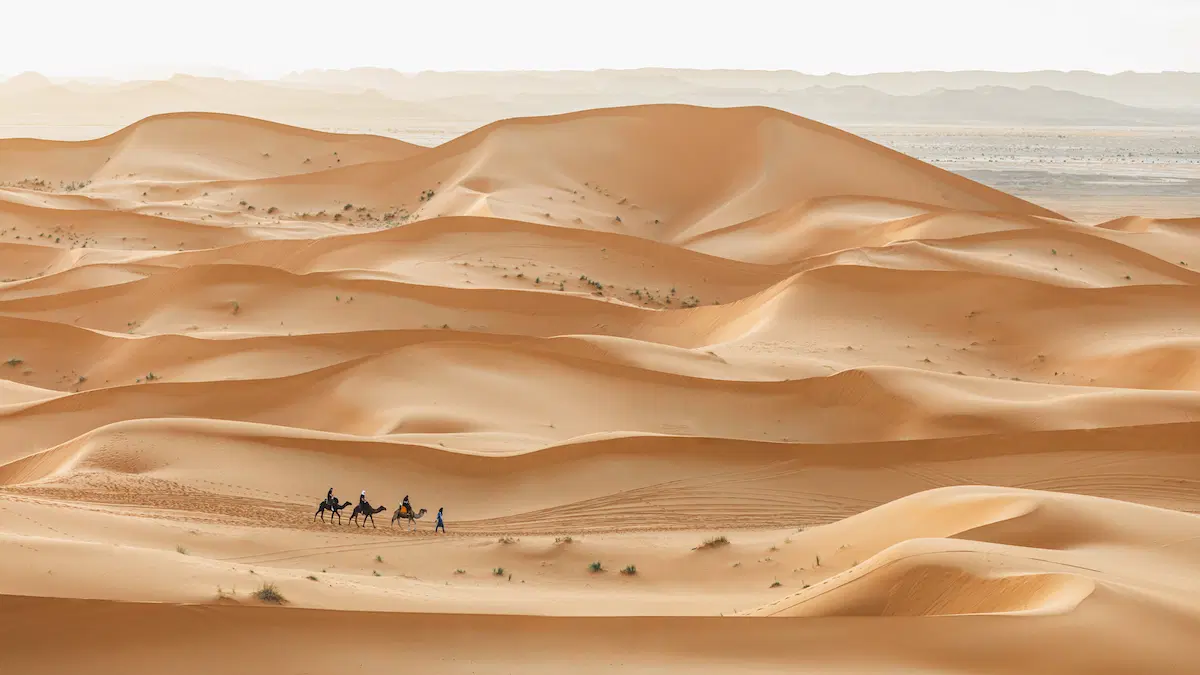
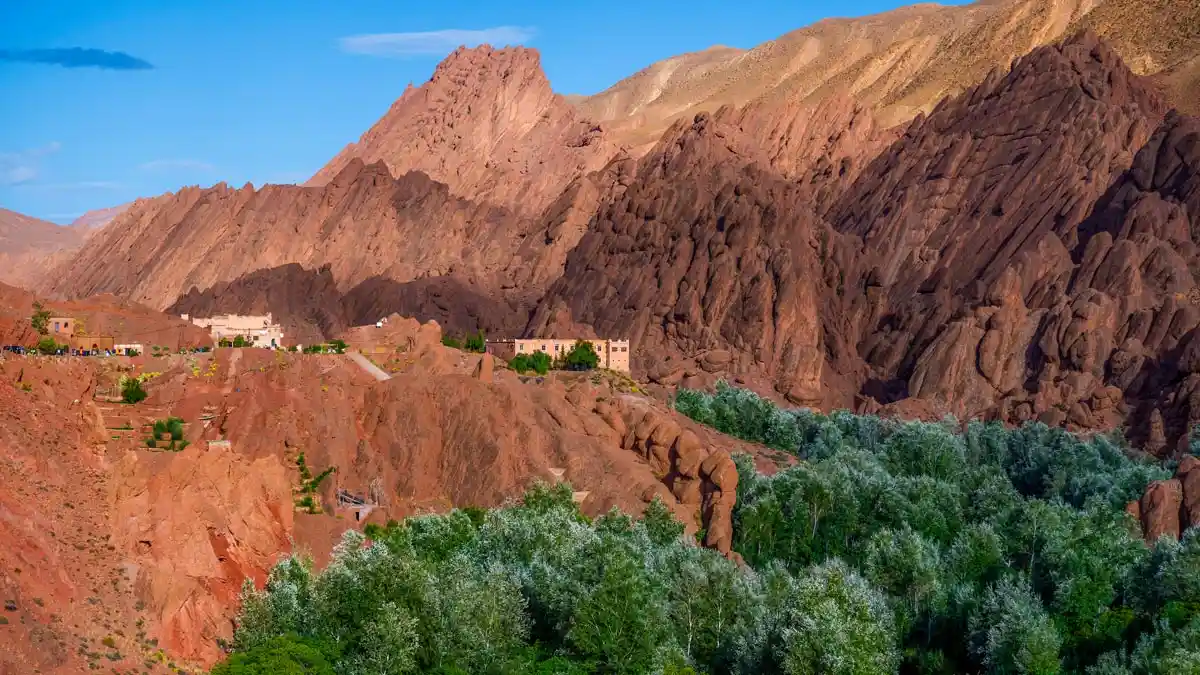
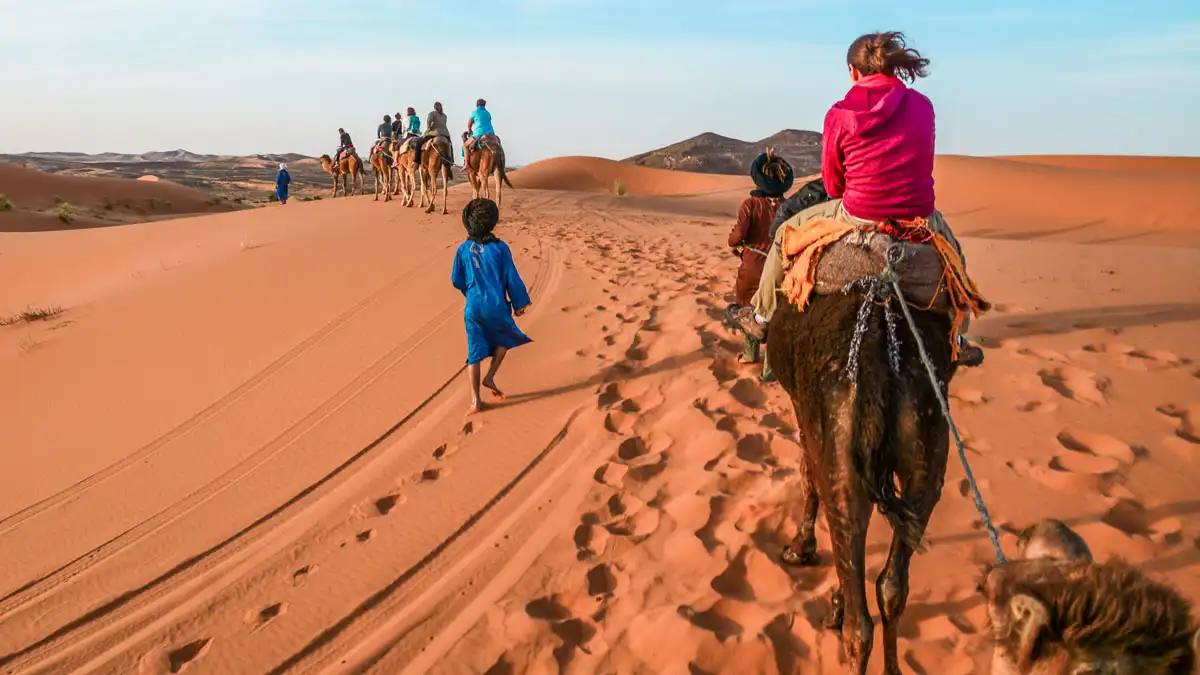
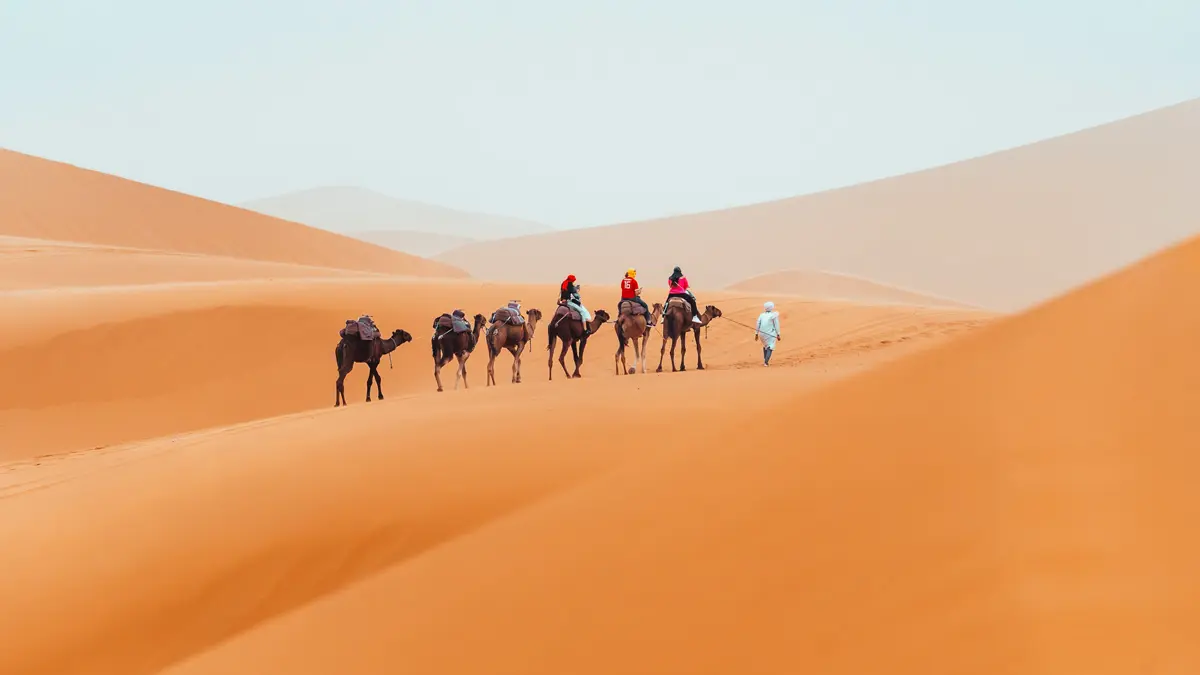
Drive east through the Skoura oasis, where earthen kasbahs stand among the palm groves; stop at the Dades Gorge for photos at the switchbacks and the rock formations known as Monkey Fingers; continue to the Todra Gorge, where the walls close to around 10 metres apart and rise 300 metres; we recommend walking a short stretch beside the cold stream here, because the temperature drop inside the canyon is the clearest way to feel how the water cut it; lunch at a riverside cafe; the landscape turns from palm groves to scrub to orange sand as you approach Merzouga; late afternoon camel trek of about an hour and a half into Erg Chebbi, timed so you cross the dunes as the sun drops; dinner is medfouna, the stuffed Berber flatbread baked in a clay oven, served at the camp; drums and fire after dinner; overnight in the desert camp.
Day 5: Merzouga
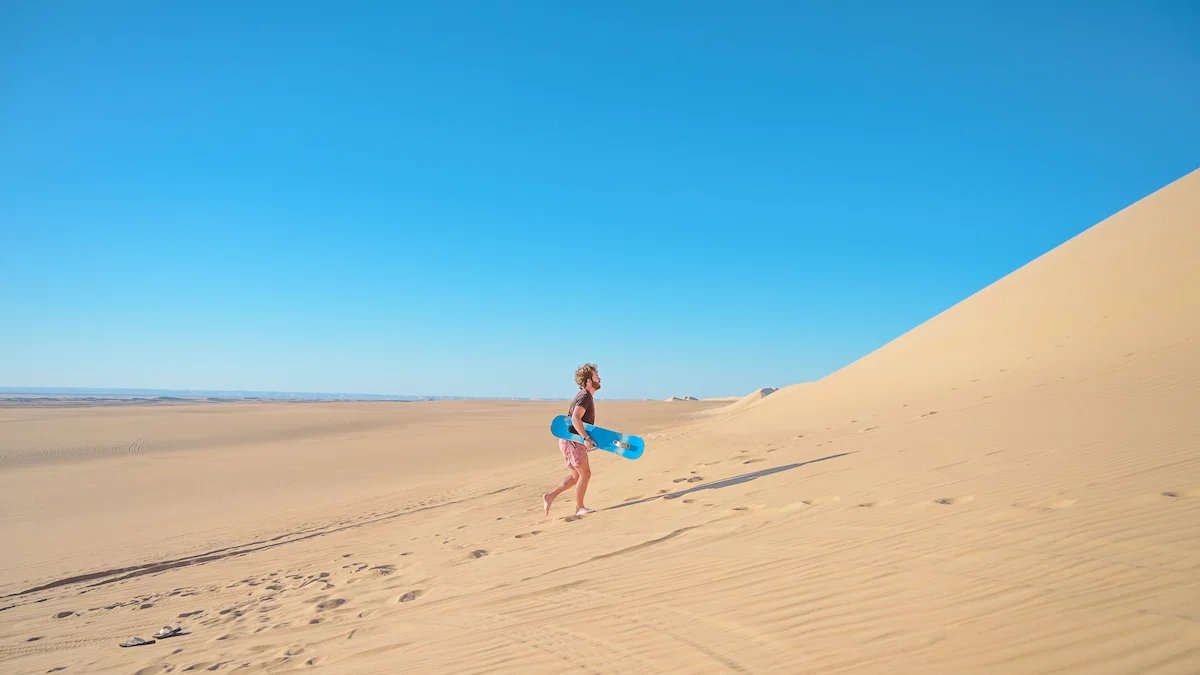
Wake before dawn and climb whichever dune you like for the sunrise, then breakfast back at the camp; the camp is your base for the day; we recommend a 4WD excursion into the desert in the morning, when the light is still low and the tracks are cool, with a visit to nomad families who move with the seasons; quad biking and sandboarding are available from the camp for anyone who wants them; lunch at the camp; afternoon camel ride through the dunes; dinner, music and stargazing at the camp; overnight in the desert camp.
Day 6: Merzouga to Fez
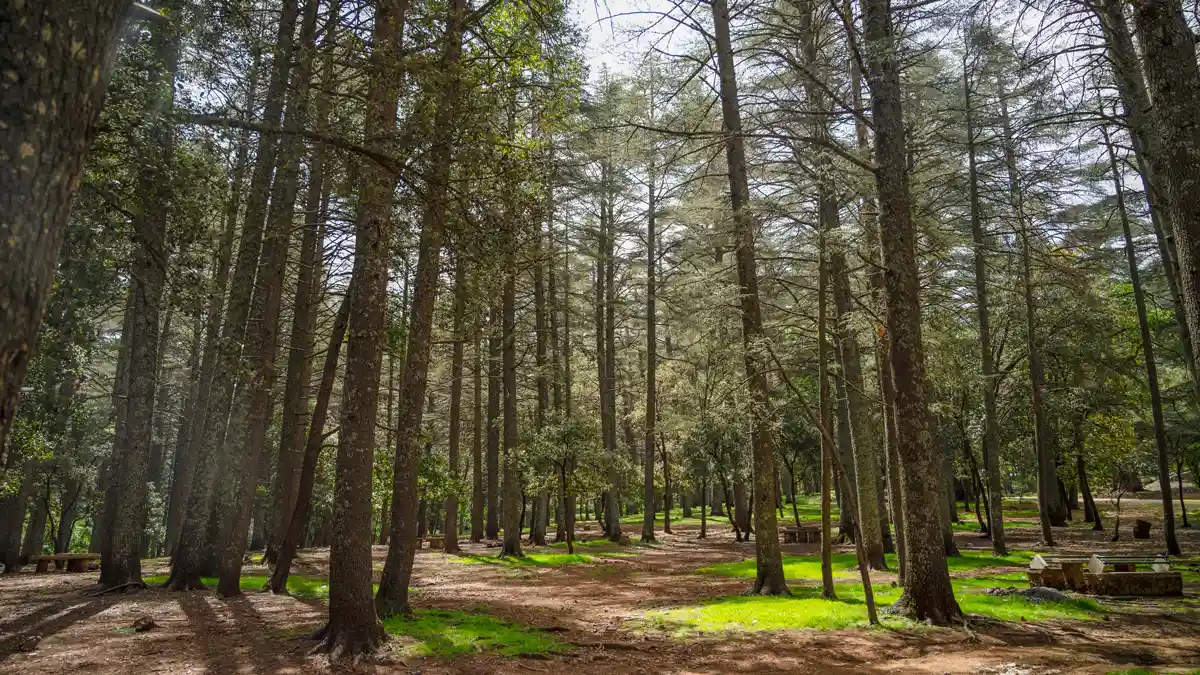
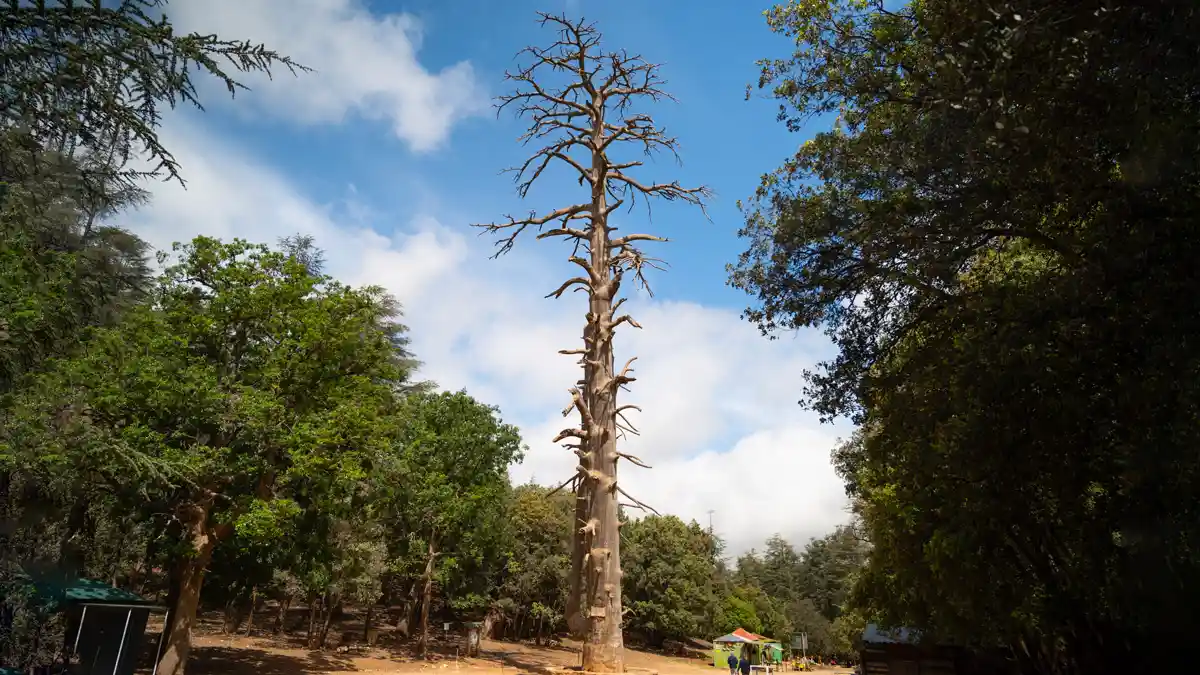
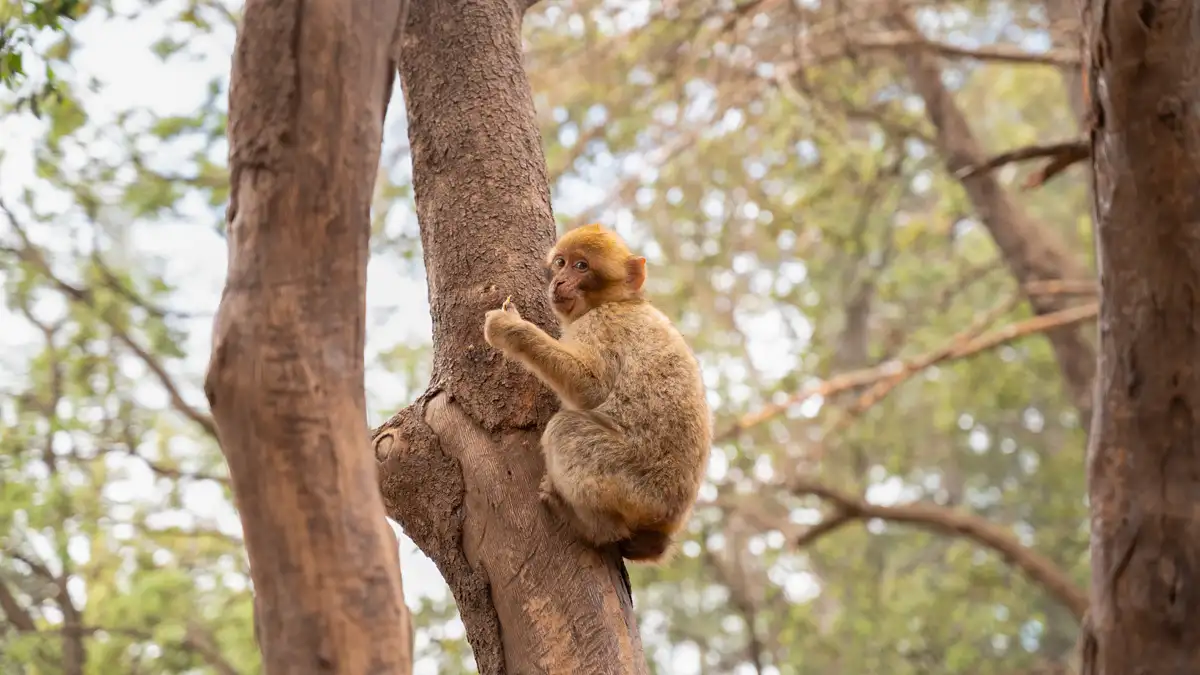
Sunrise from the dunes and breakfast at the camp, then ride the camels back out to the vehicle; this is a full travel day, and we recommend treating it that way rather than trying to add sightseeing at the end; the road runs north through the Ziz Valley, with a panoramic stop above the palm groves and fortified villages; lunch in Midelt, a town known for its apple orchards; climb into the Middle Atlas for a break at Ifrane and the cedar forest, where Barbary macaques gather around an 800-year-old cedar; keep snacks out of sight, they are wild and quick; arrive Fez in the early evening; dinner at the riad; overnight in a riad in the Fez medina.
Day 7: Fez – guided day
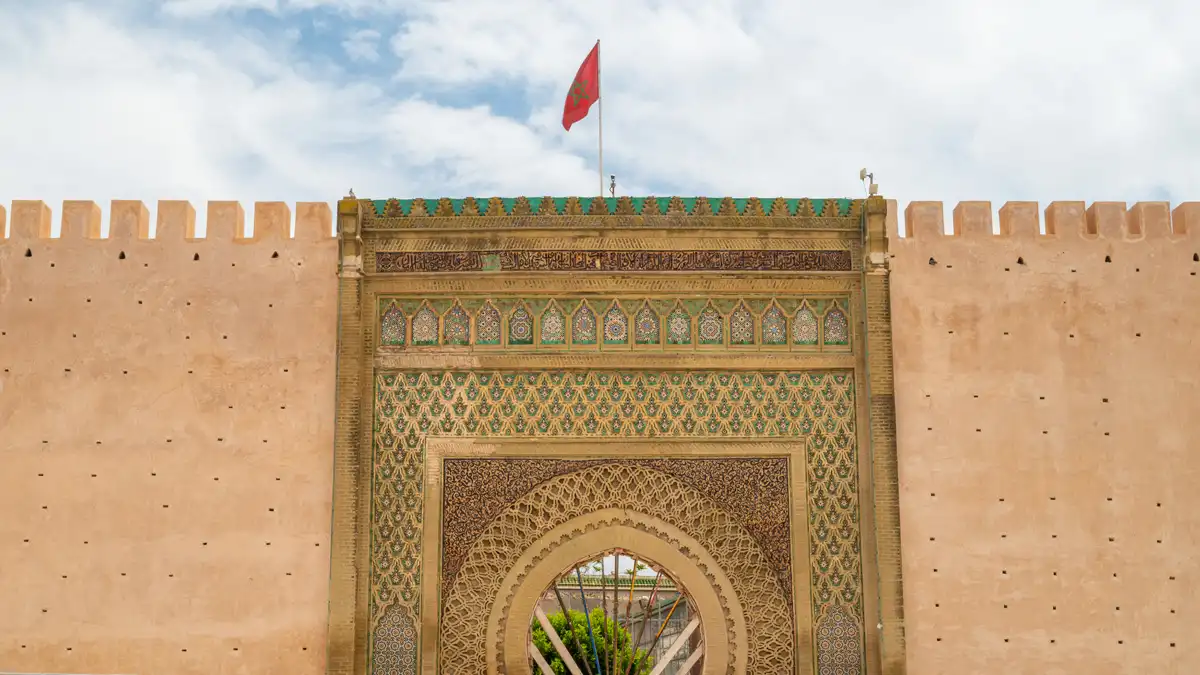
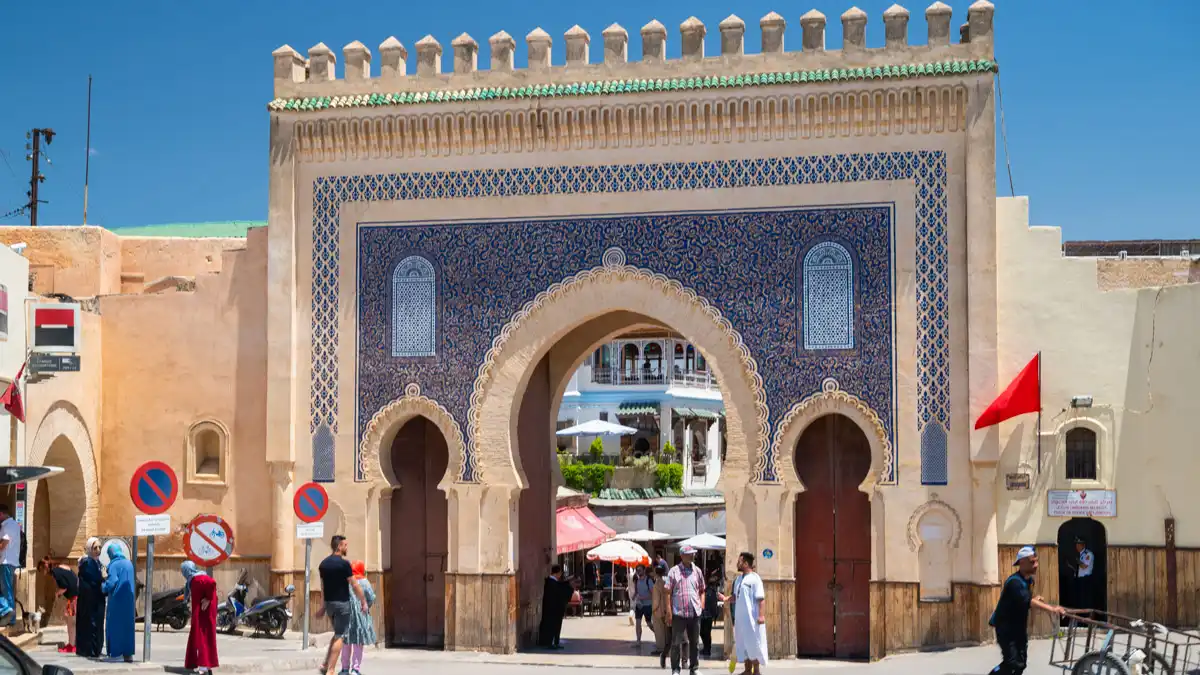
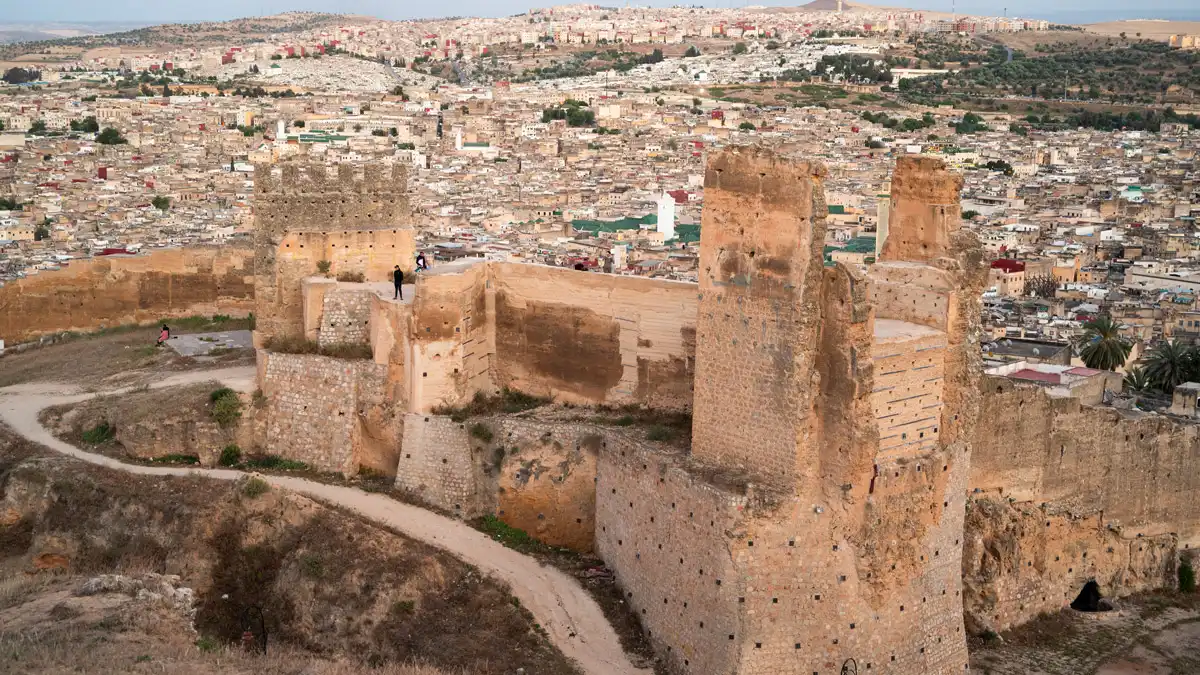
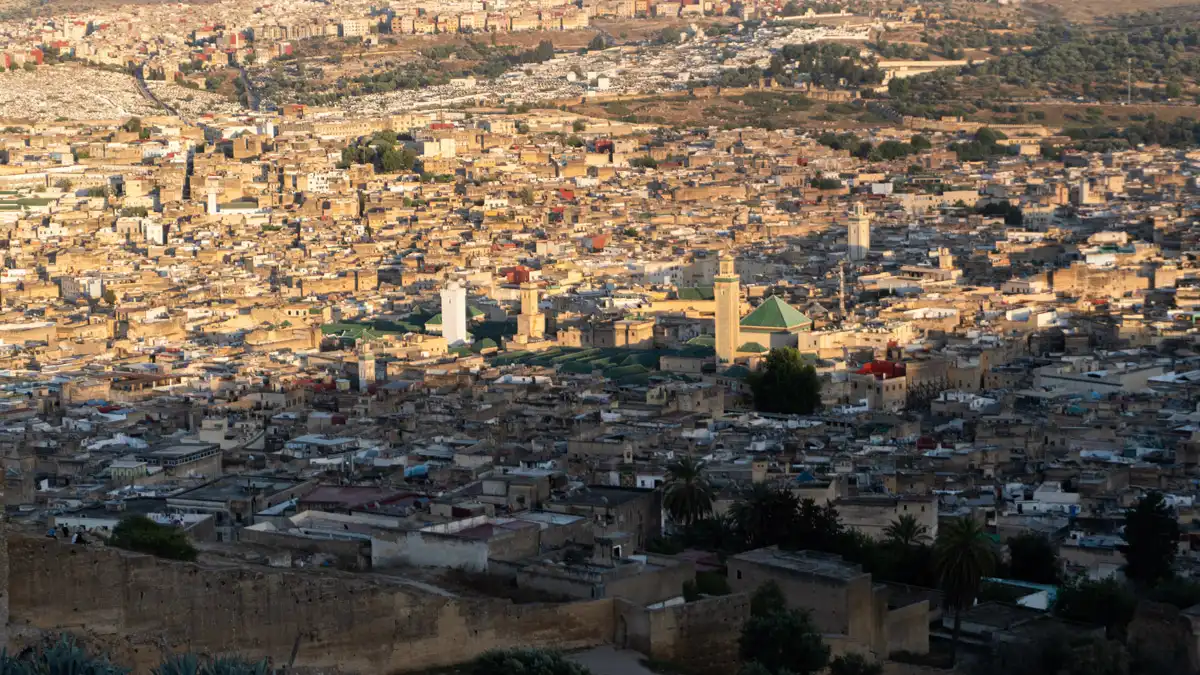
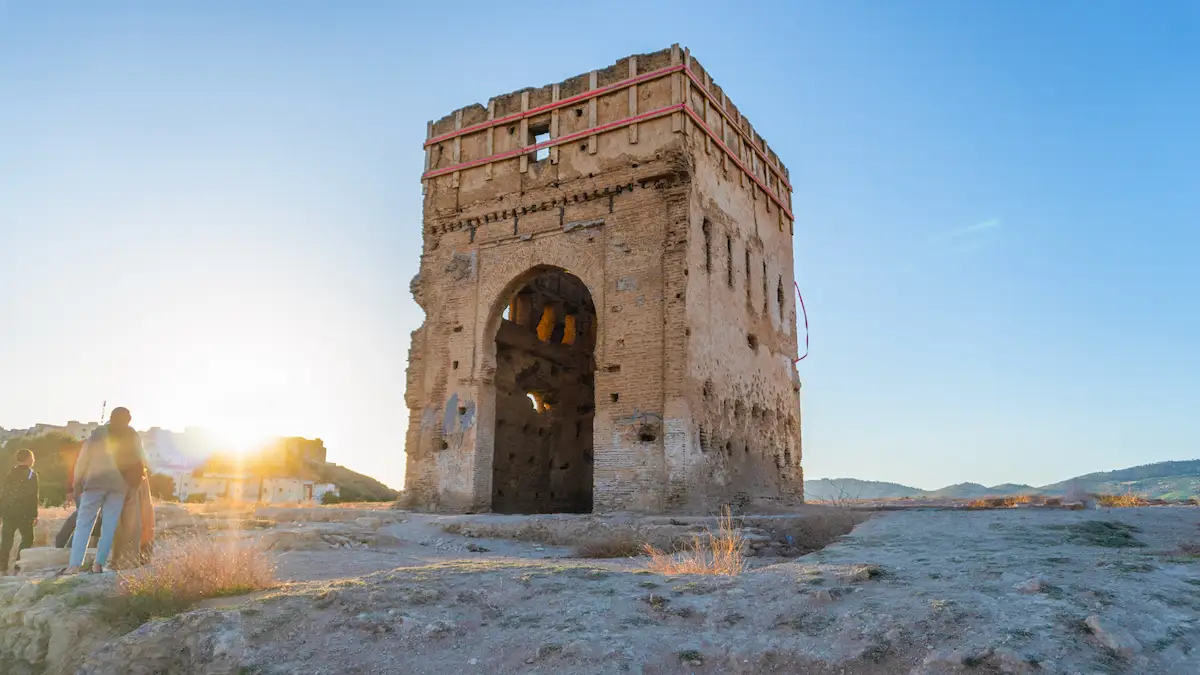
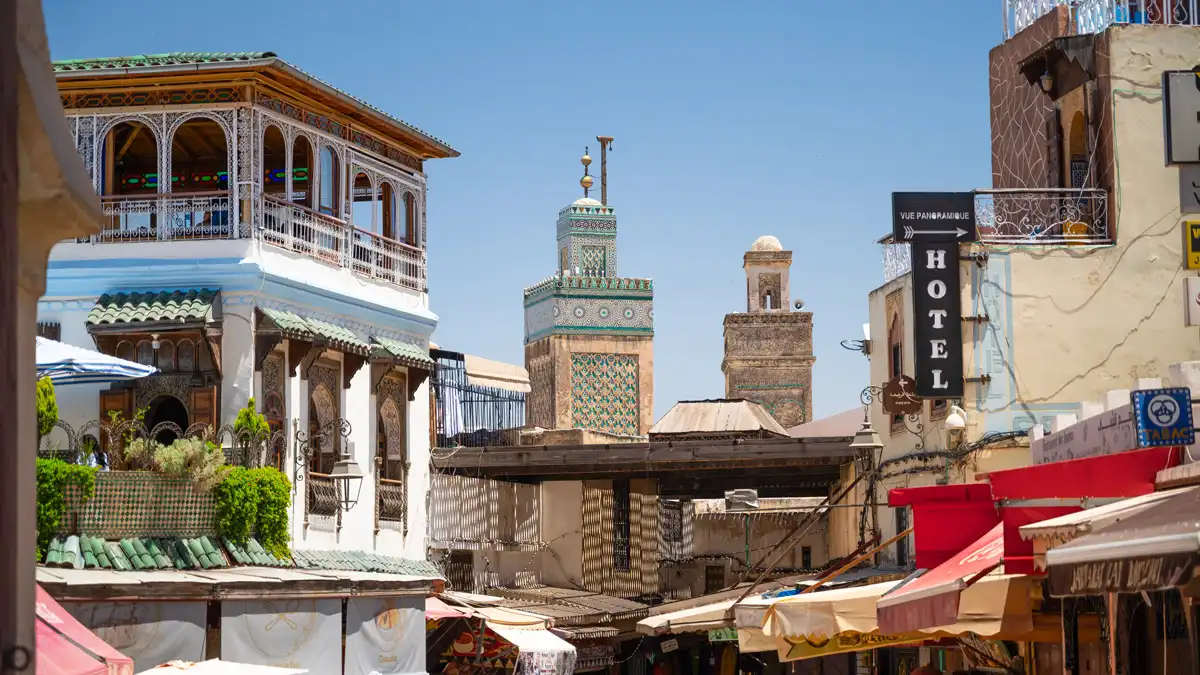
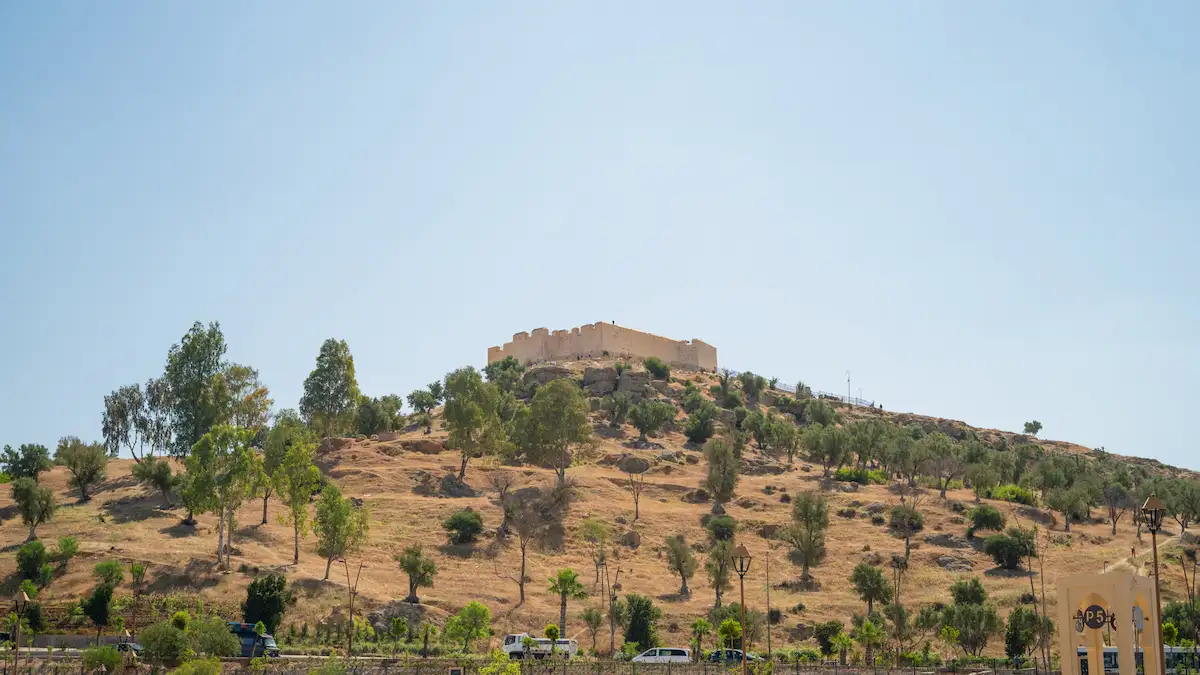
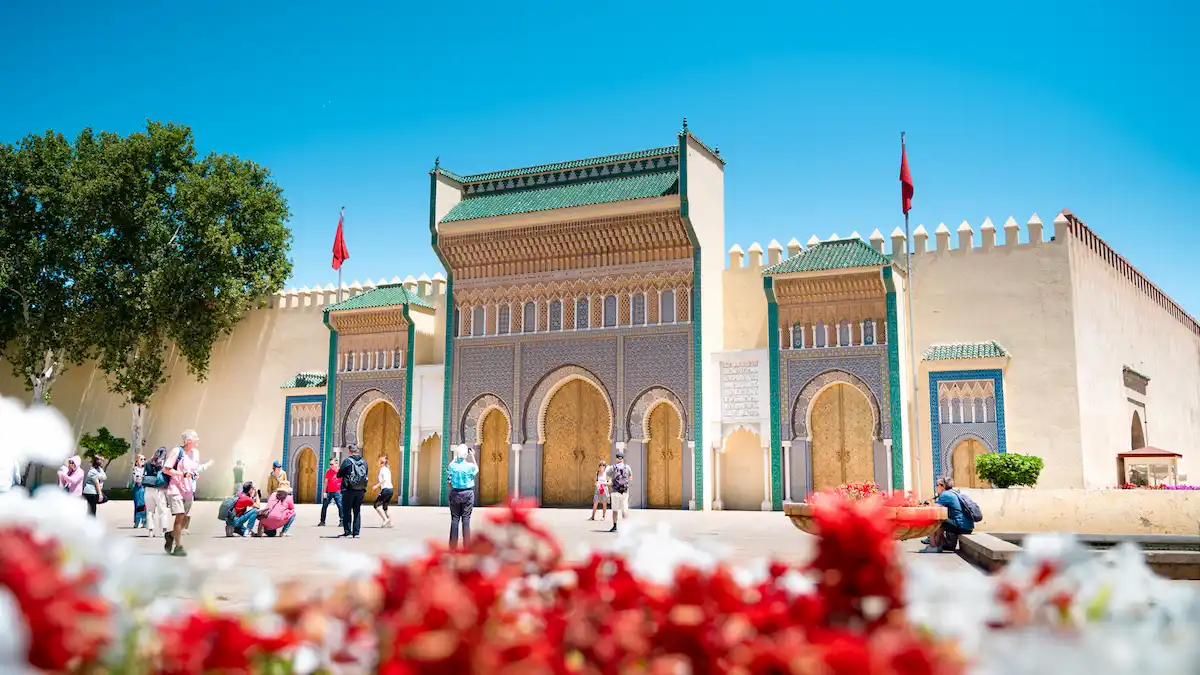
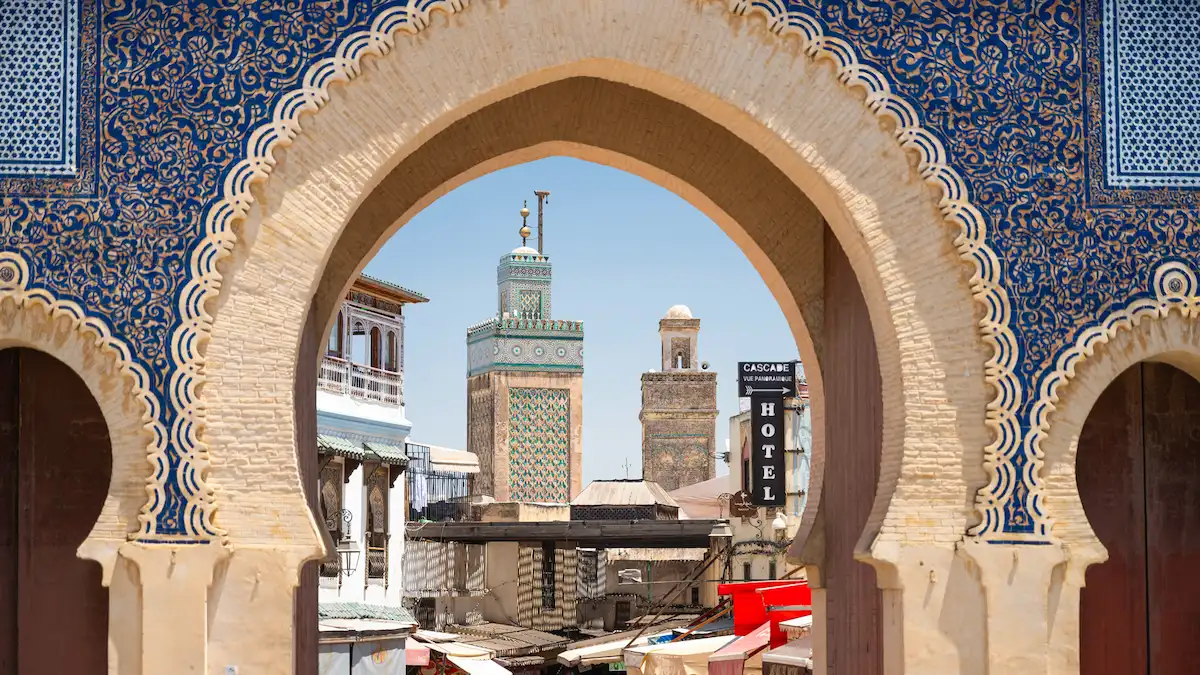
We recommend beginning at Borj Nord, the 16th-century hillside fortress, because seeing the medina first as one dense field of rooftops and minarets makes the alleys below far easier to read; continue to Dar el Makhzen, the Royal Palace, where the brass doors and cedar surrounds are the part visitors can admire from the square; enter Fez el-Bali through Bab Boujloud, the Blue Gate; lunch in the medina; afternoon shopping experience at the community cooperatives, the weavers, the brass workers at Place Seffarine, and the pottery and zellij workshops where the tiles are still cut by hand; end at the Marinid Tombs for sunset, when the call to prayer rises out of the valley below; overnight in Fez.
Day 8: Fez – full guided day inside the medina
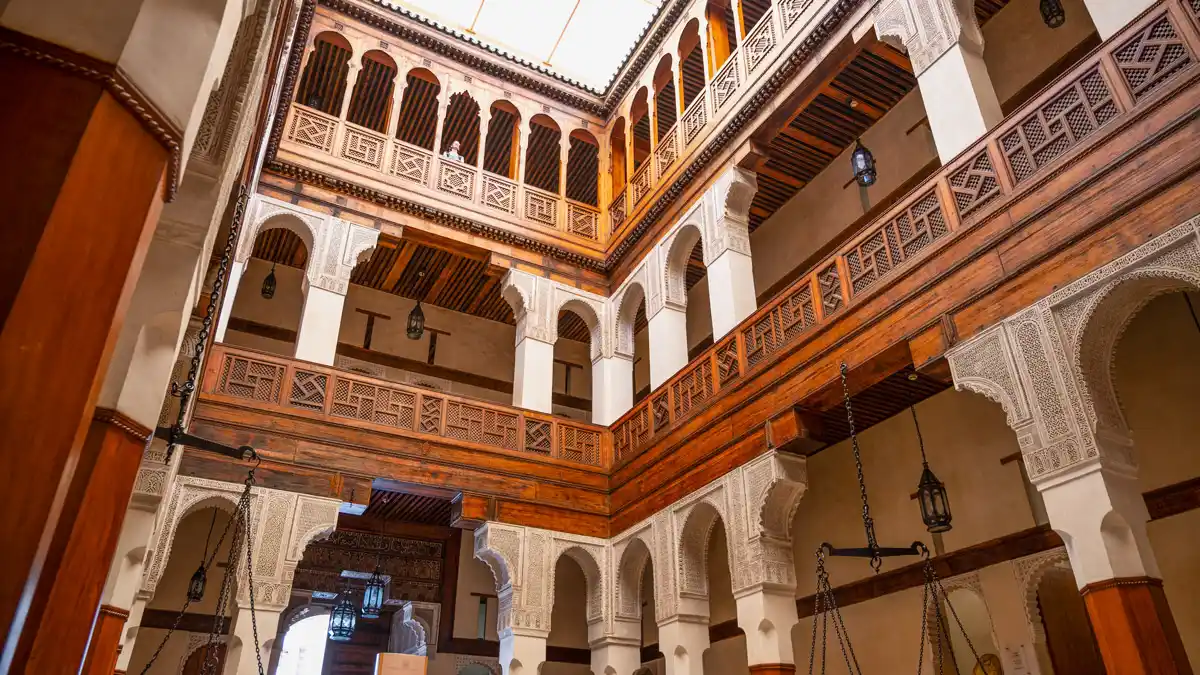
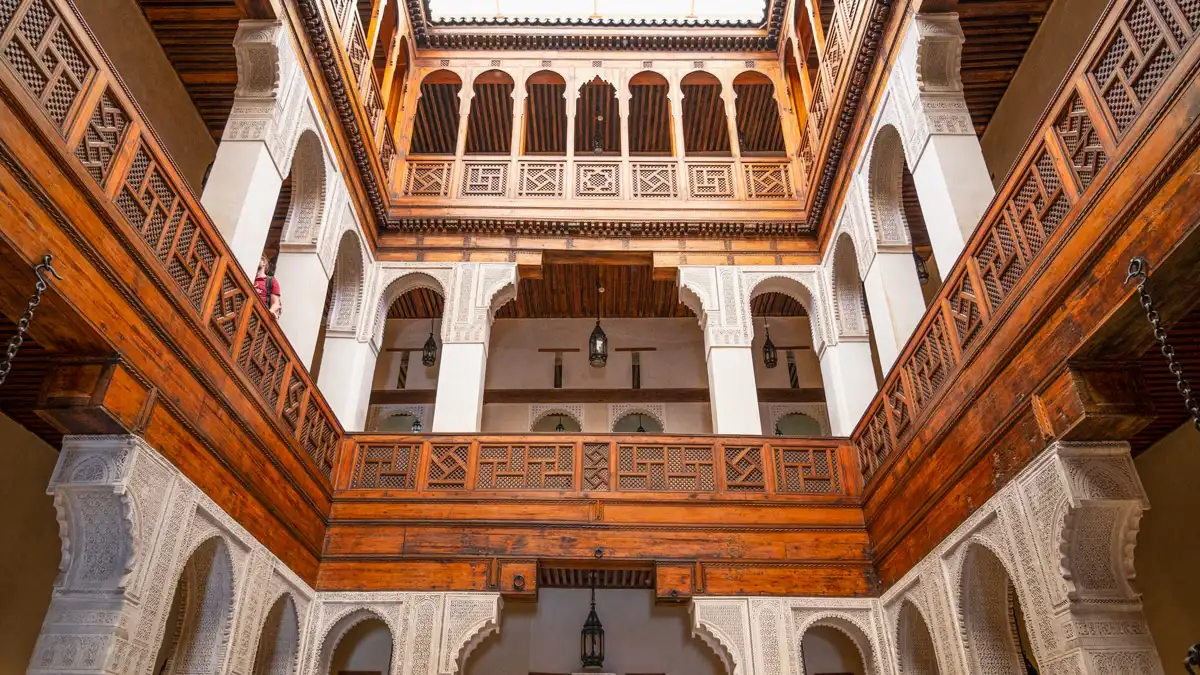
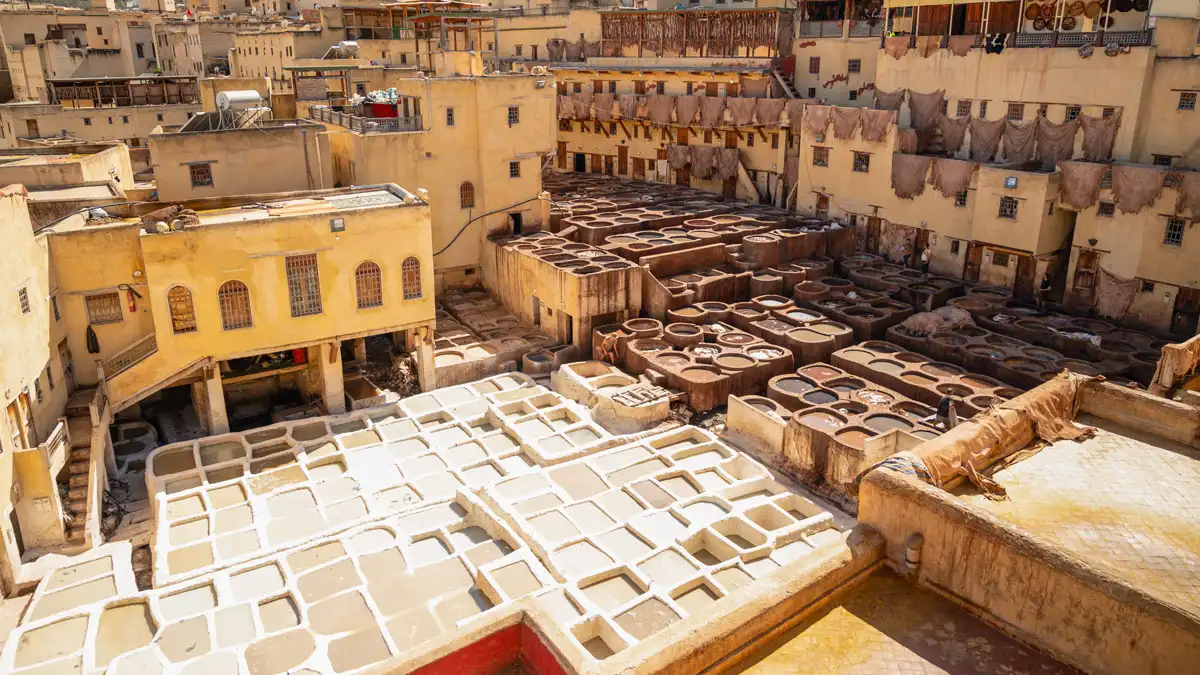
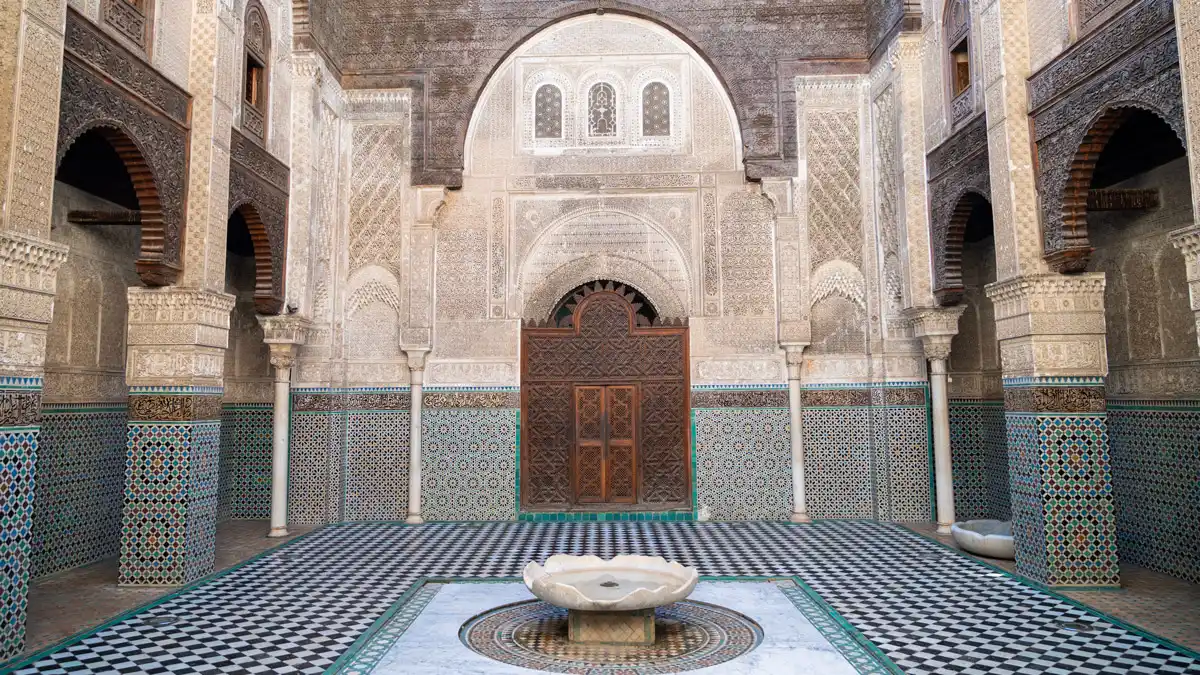
The largest car-free urban area in the world; visit the Chouara Tannery, where leather is still cured in stone vats by methods unchanged since the medieval period; we recommend going in the morning, because the vats are worked early and the light on the terraces is better; continue to Al-Qarawiyyin, founded in 859 and the oldest working university in the world, the Bou Inania Madrasa, the Attarine Madrasa and museum, and the Nejjarine Fountain; lunch in the medina; afternoon walk through Fez Jedid and the old Jewish quarter to see how the city expanded after the 13th century, with further time in the souks; overnight in Fez.
Day 9: Fez to Meknes and Volubilis to Fez
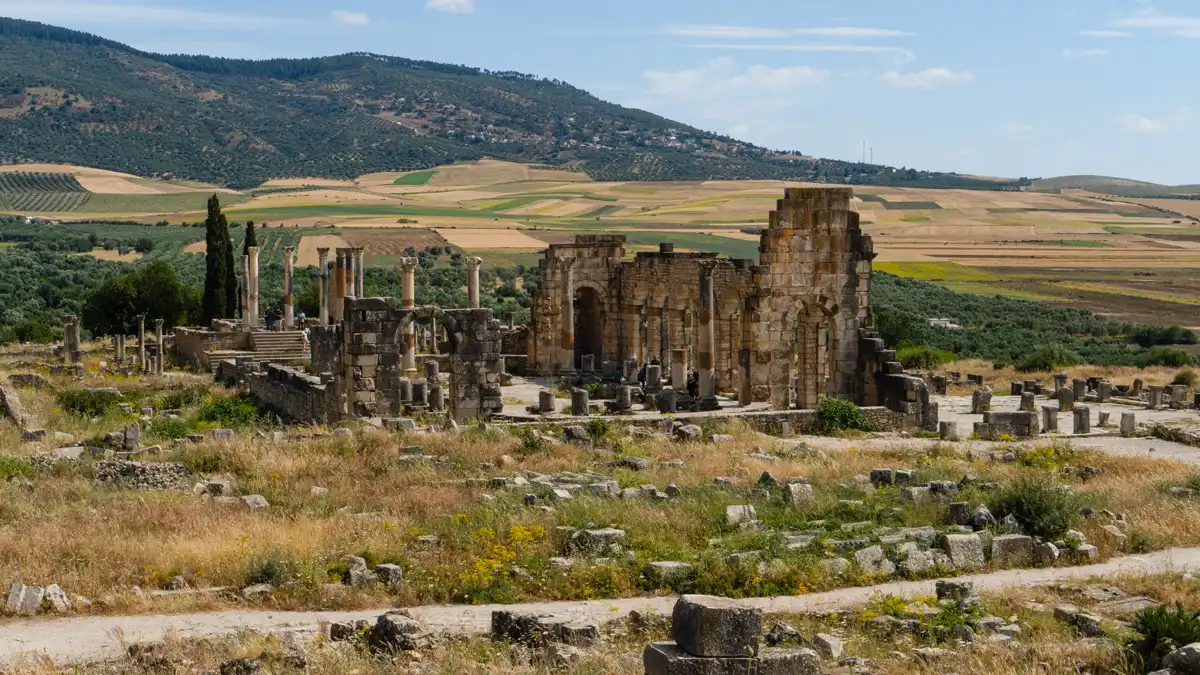
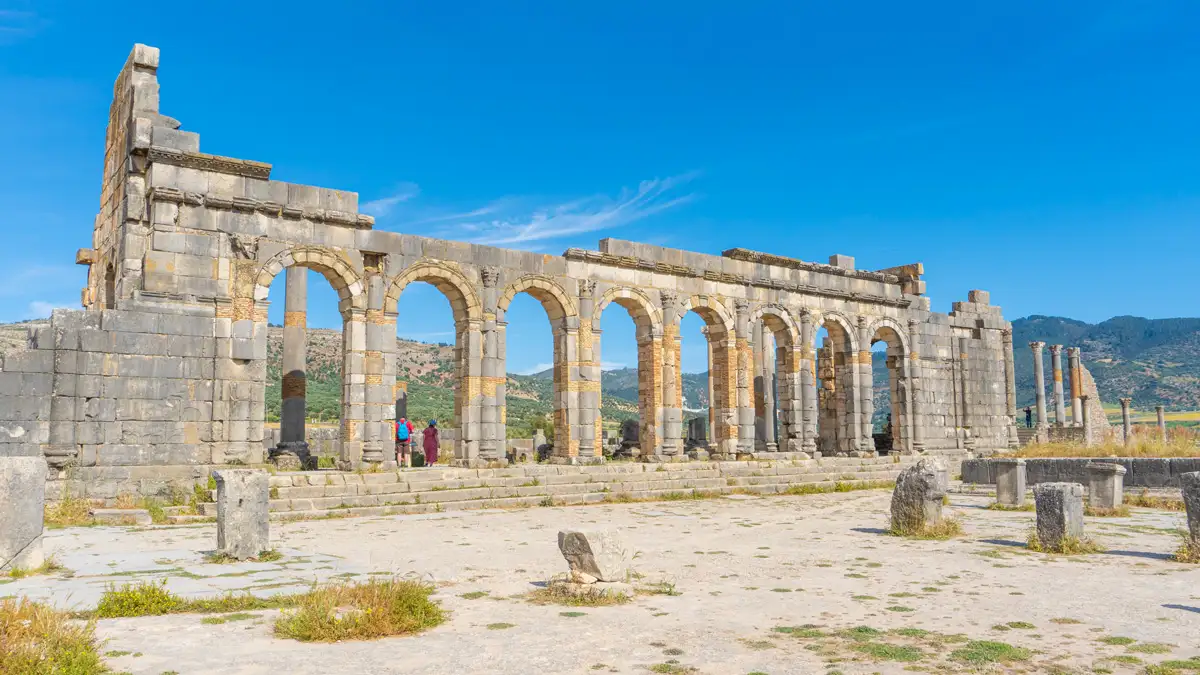
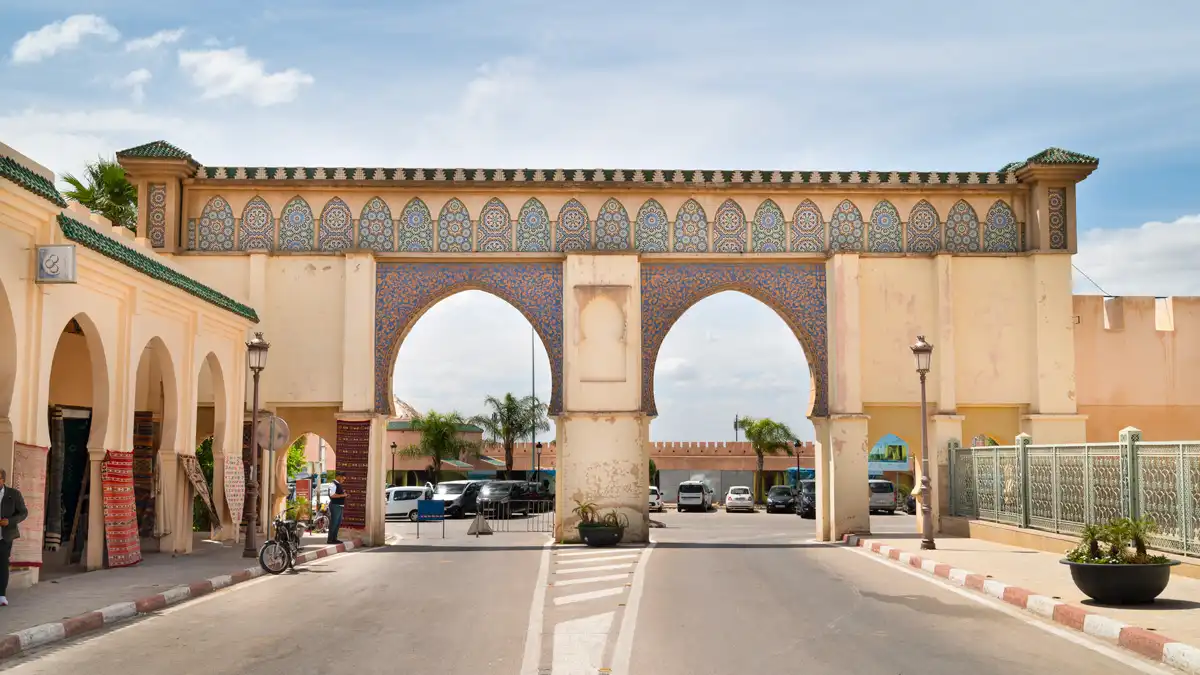
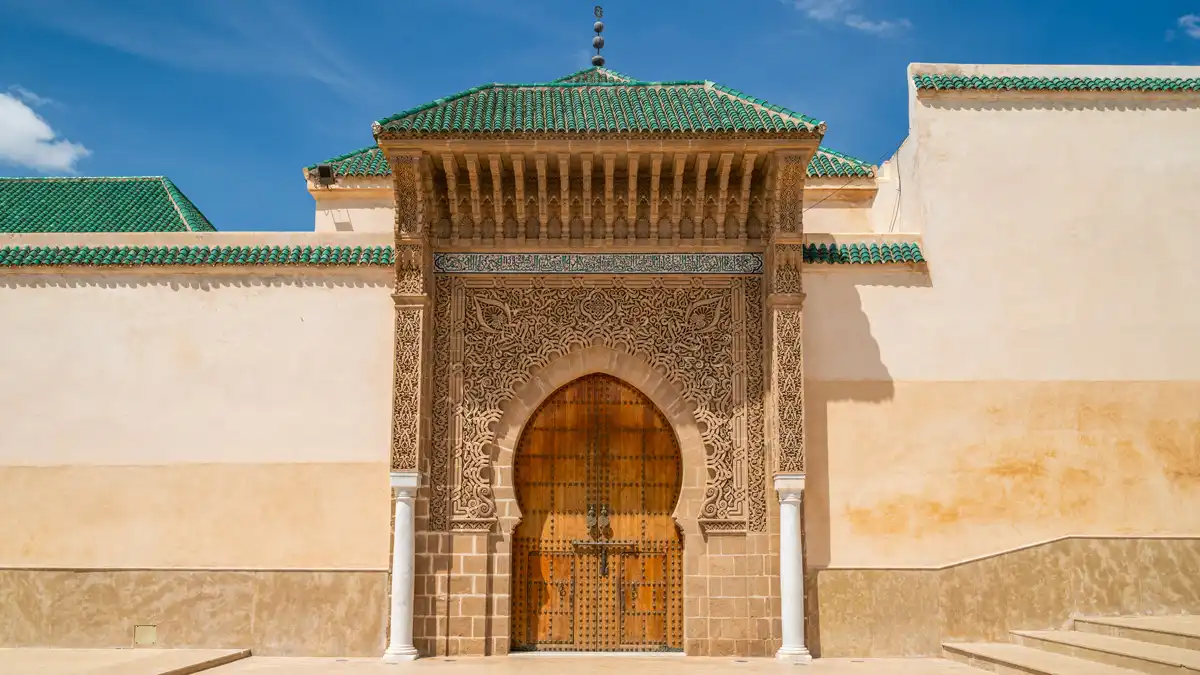
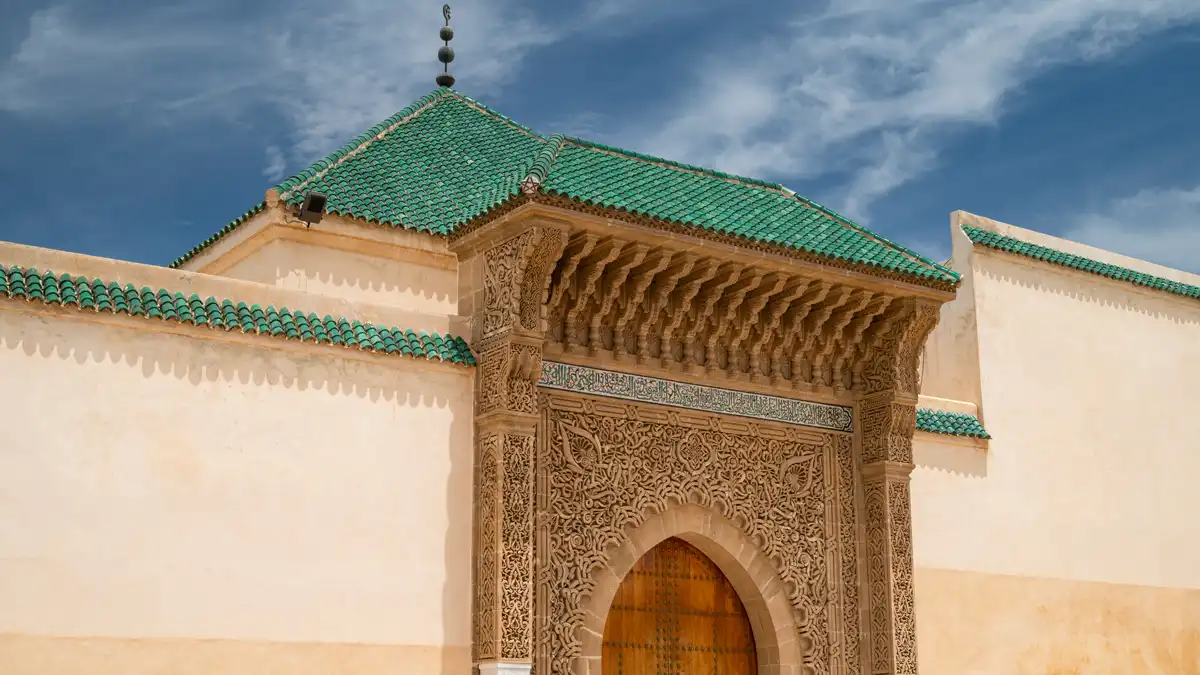
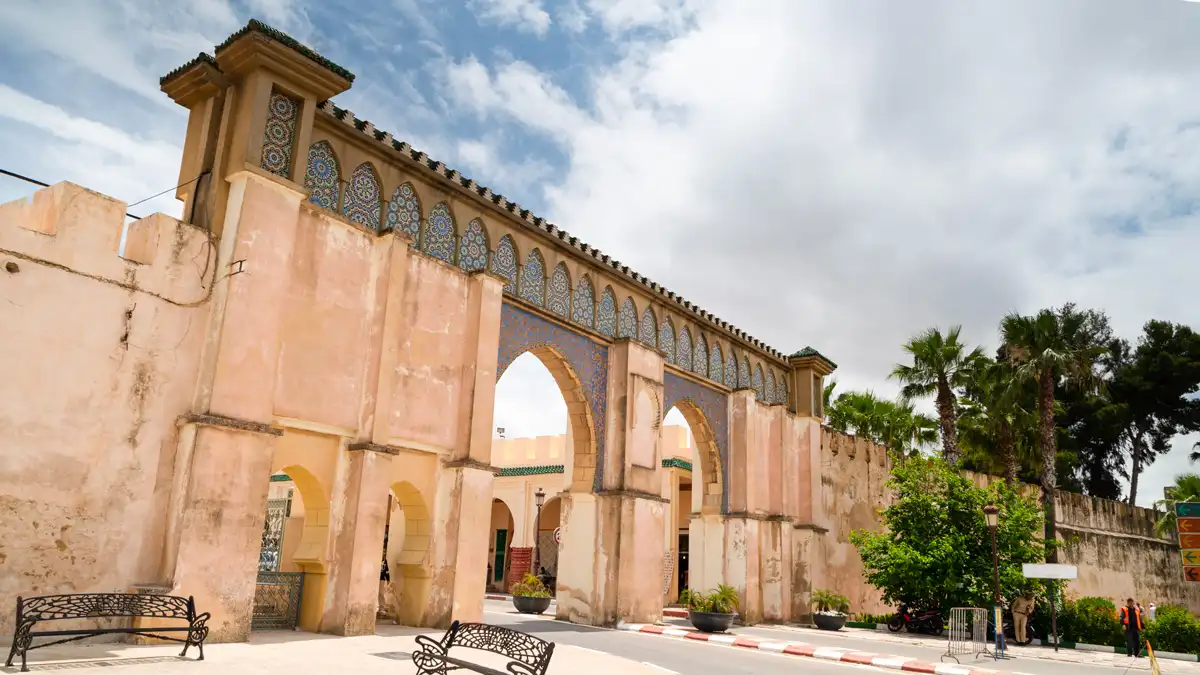
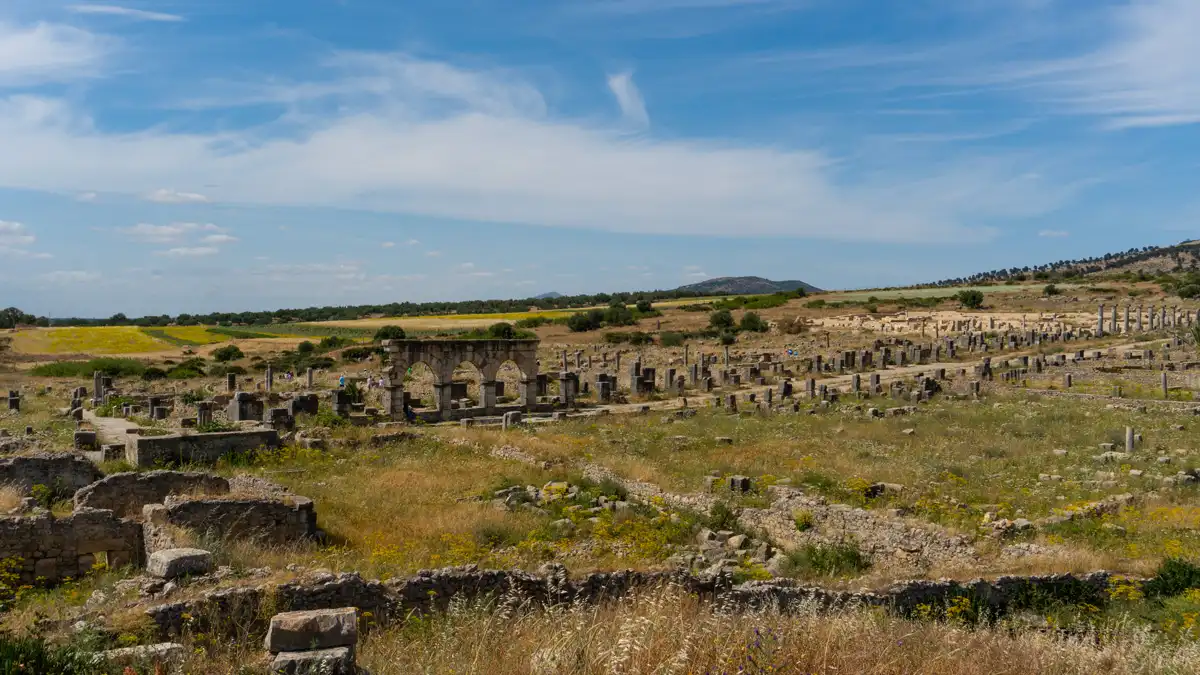
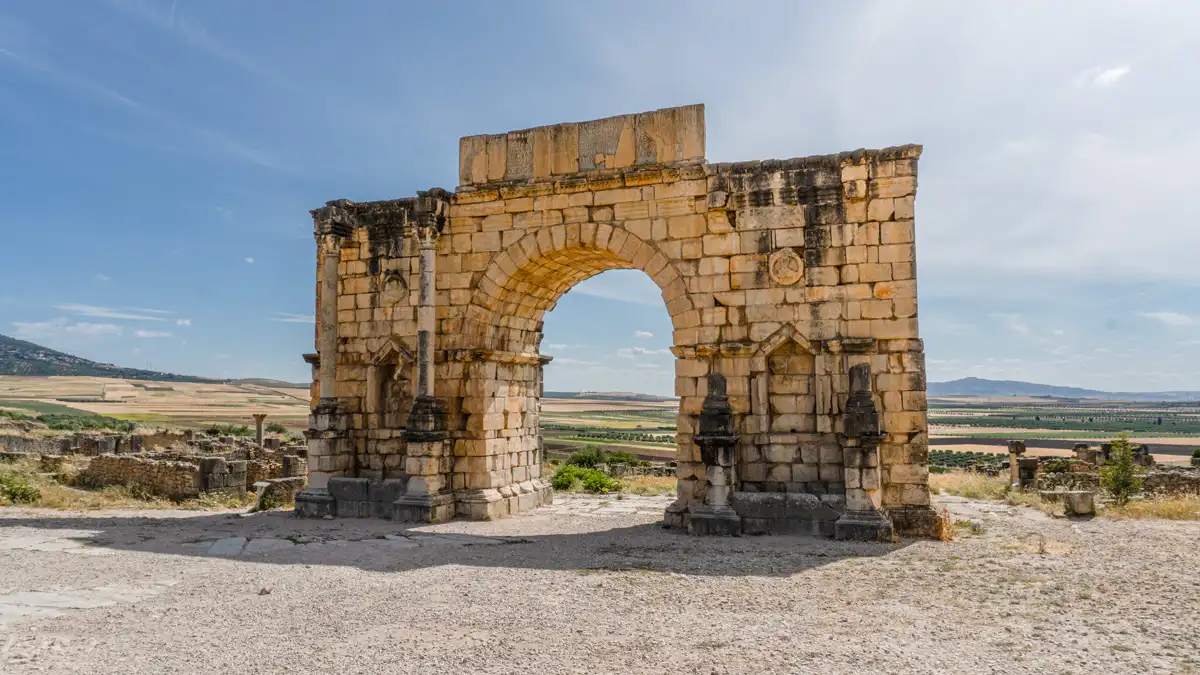
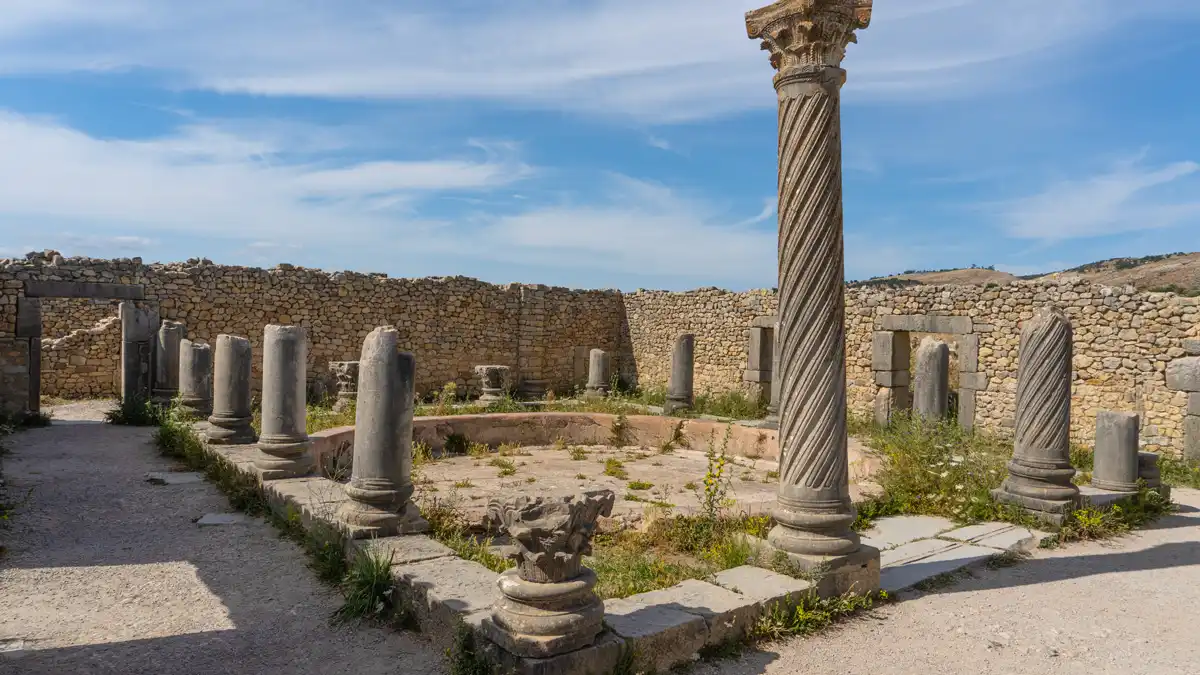
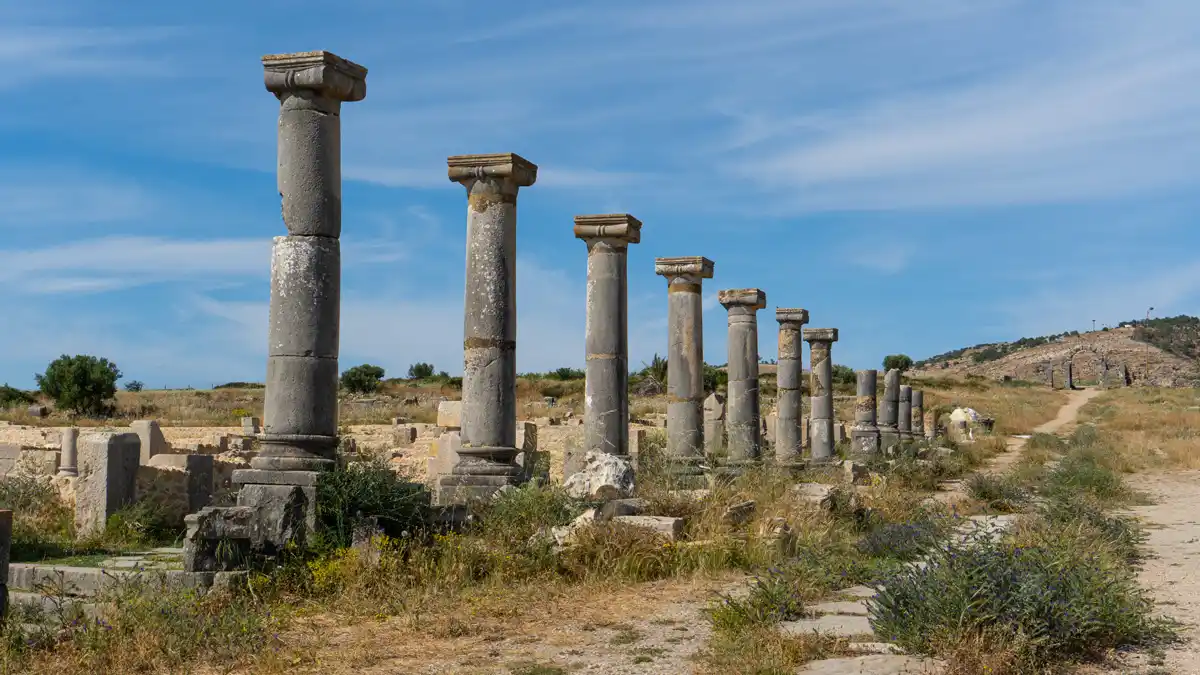
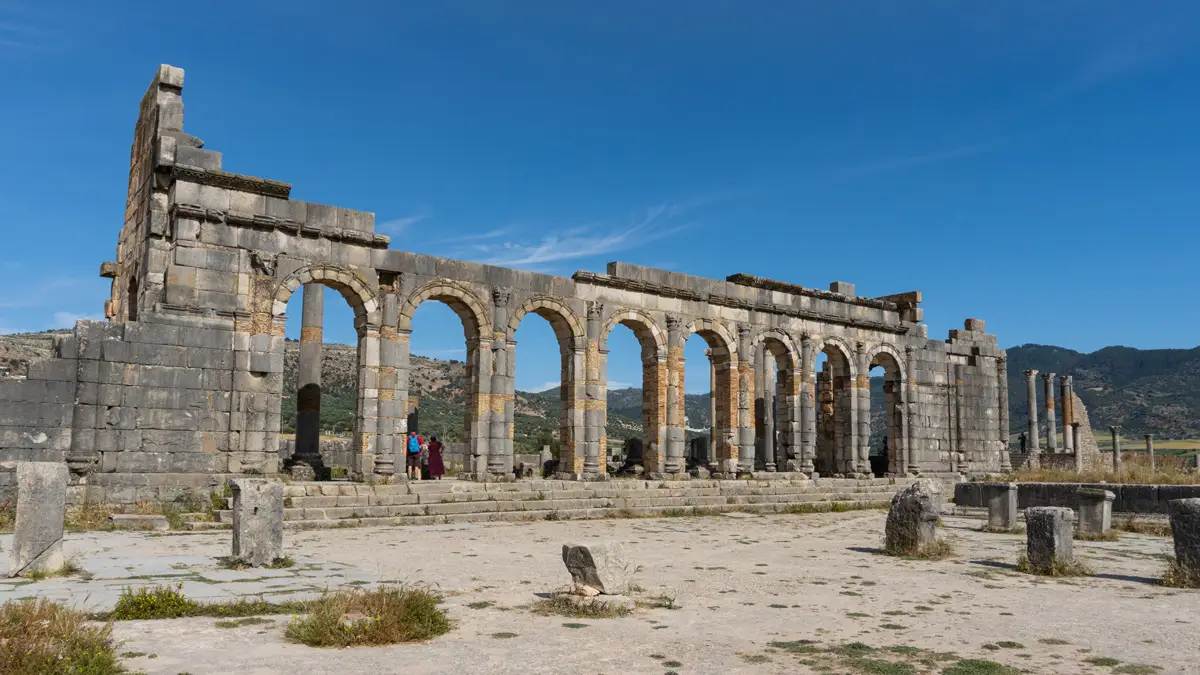
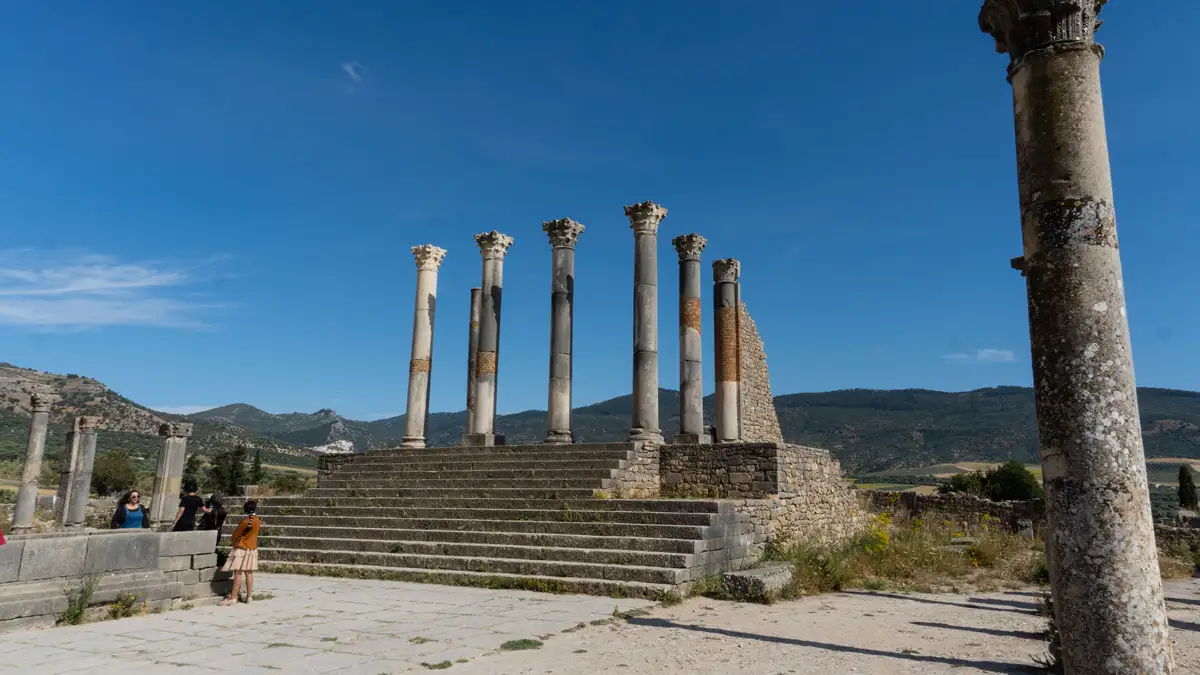
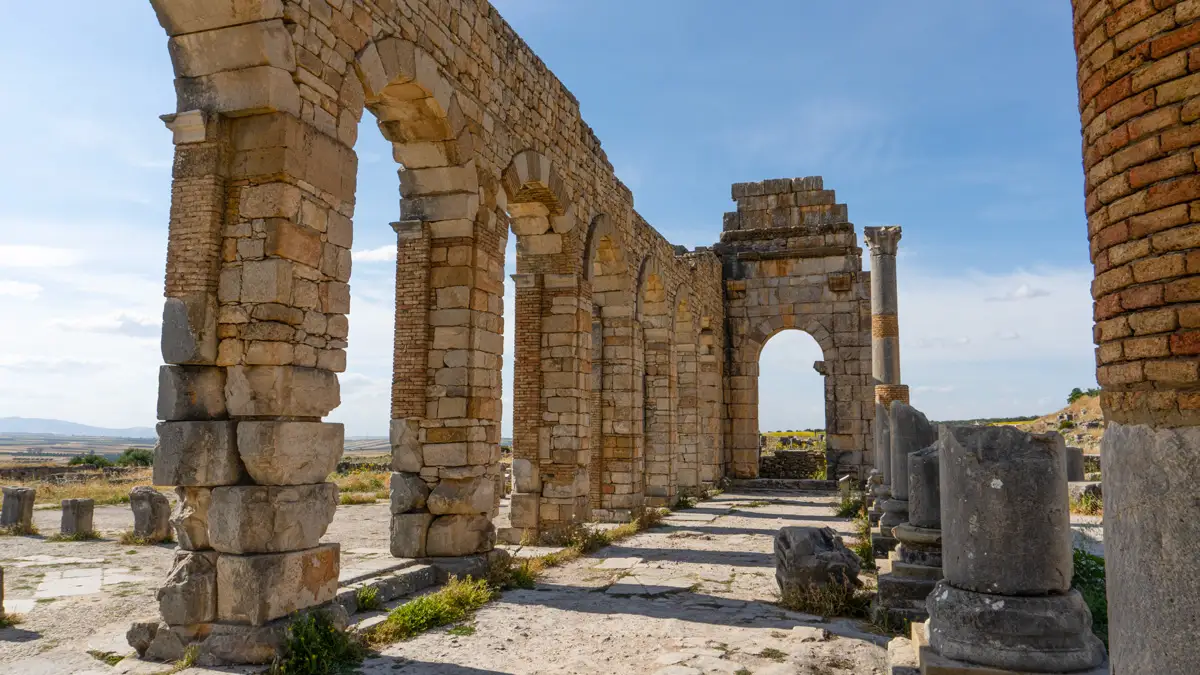
Drive to Meknes for Bab Mansour and the Heri es-Souani granaries, whose walls were built thick enough to hold grain cool for Moulay Ismail’s stables; visit the Moulay Ismail Mausoleum for its zellij and carved stucco; continue to Moulay Idriss Zerhoun, the whitewashed holy town spread across two hills; we recommend Volubilis in the afternoon, because the low sun brings out the relief in the floor mosaics of the House of Orpheus, still set where they were laid, and the olive presses stand open to the sky; lunch in Meknes; return to Fez for the night; overnight in Fez.
Day 10: Fez to Chefchaouen
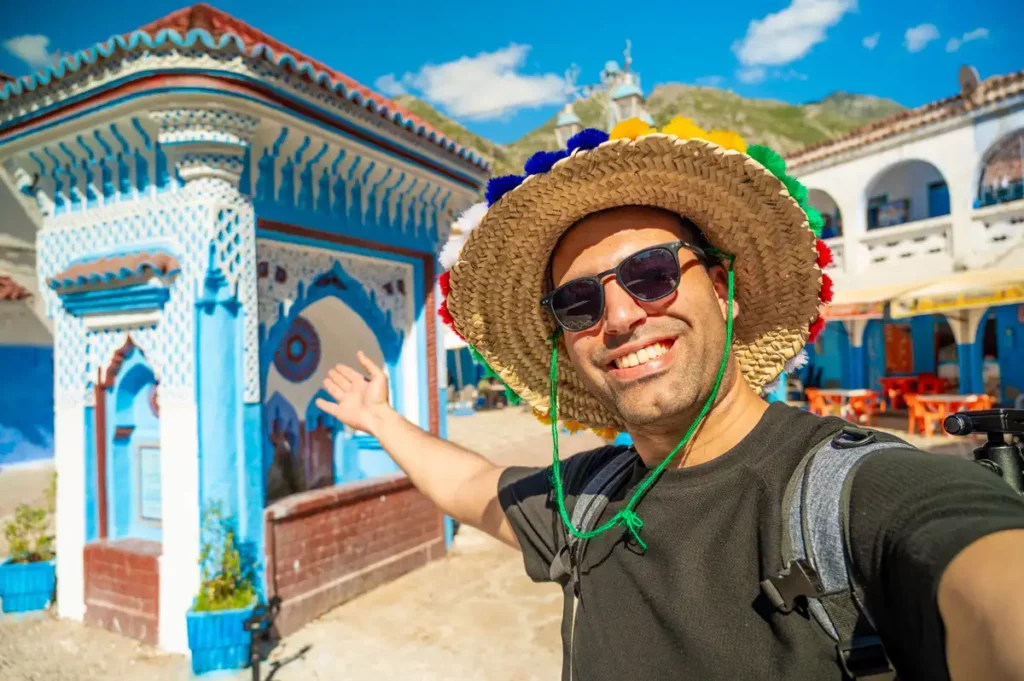
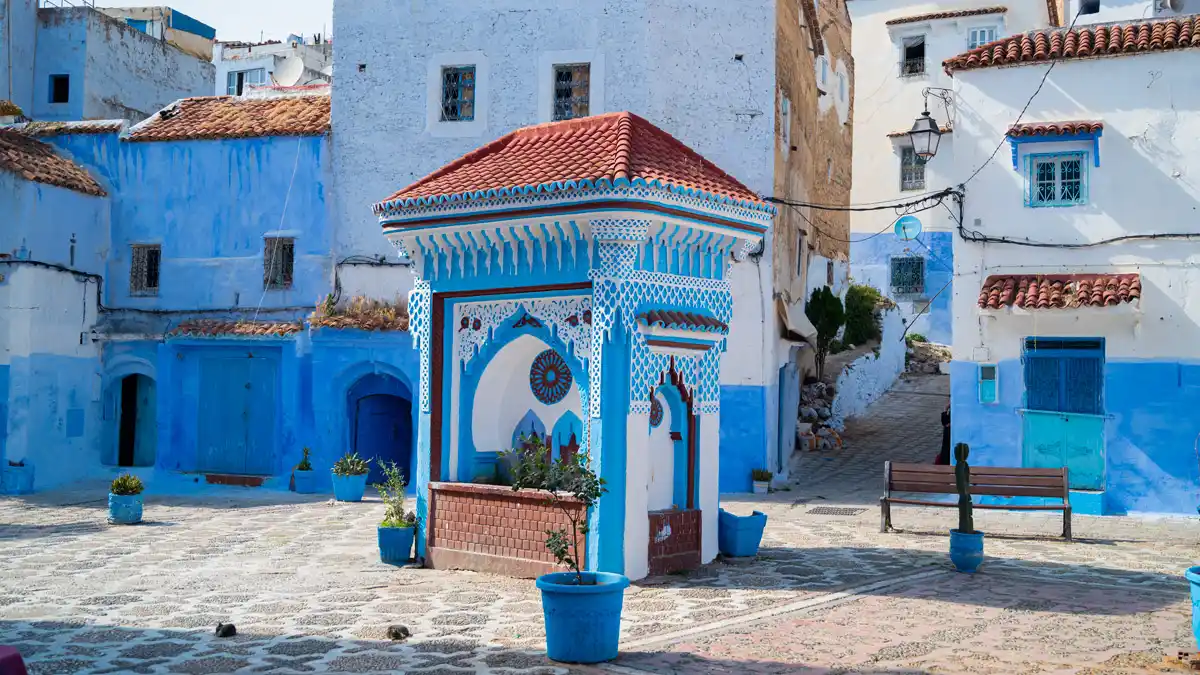
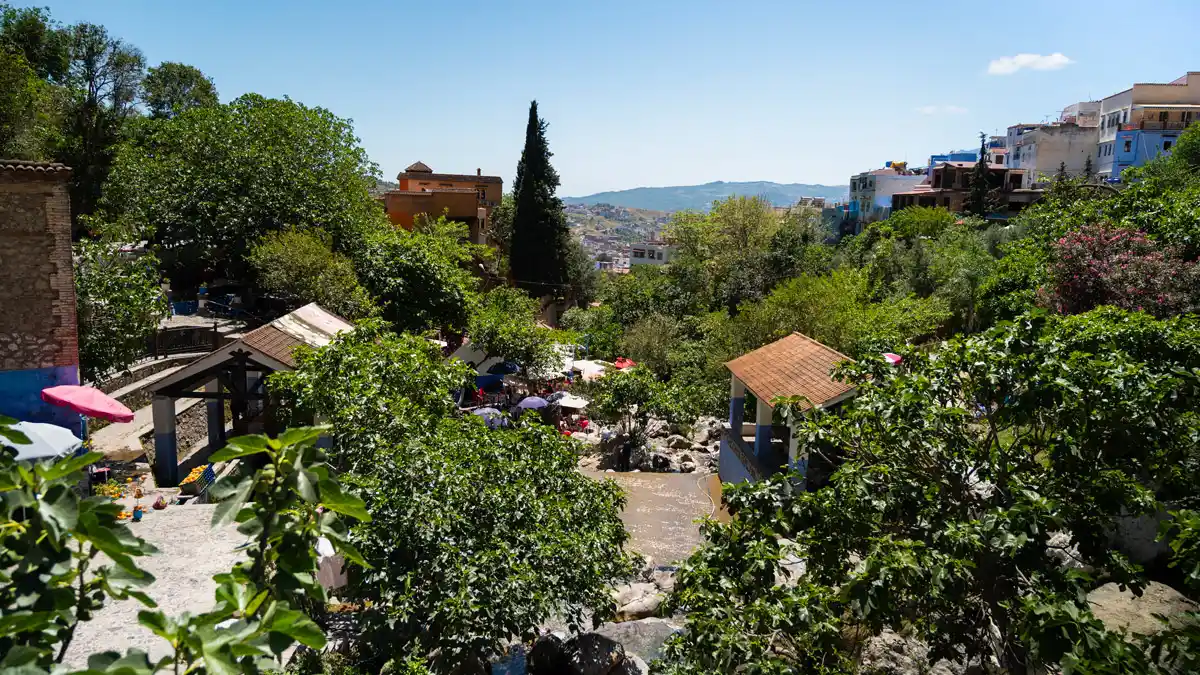
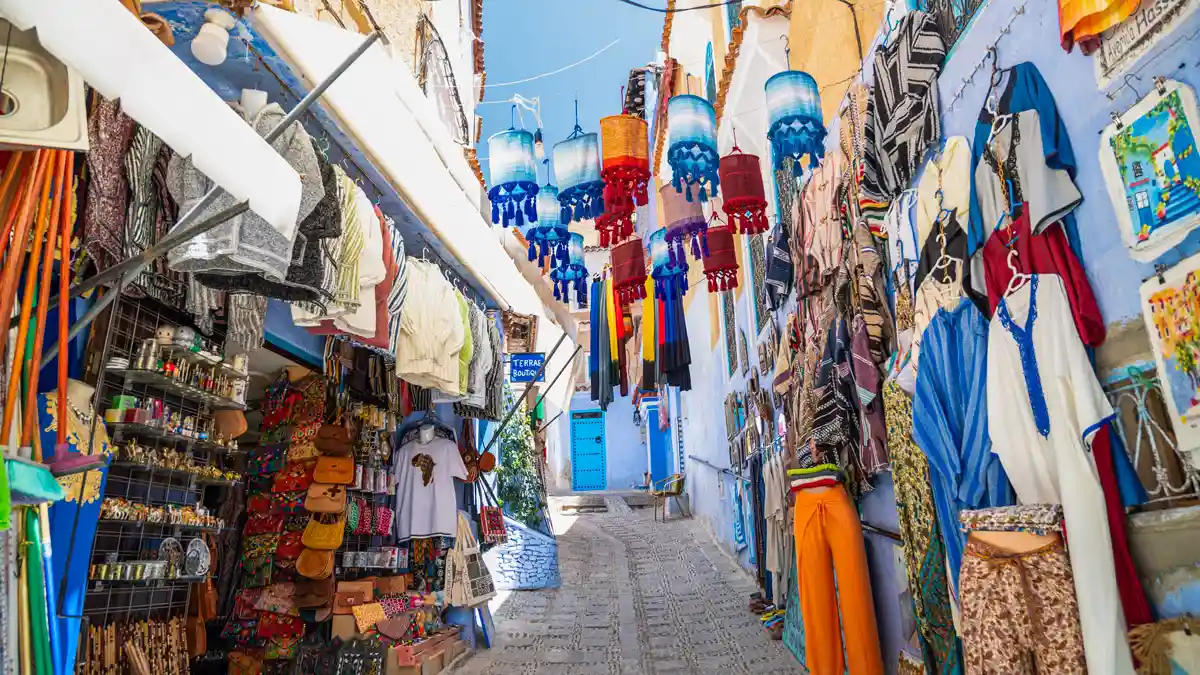
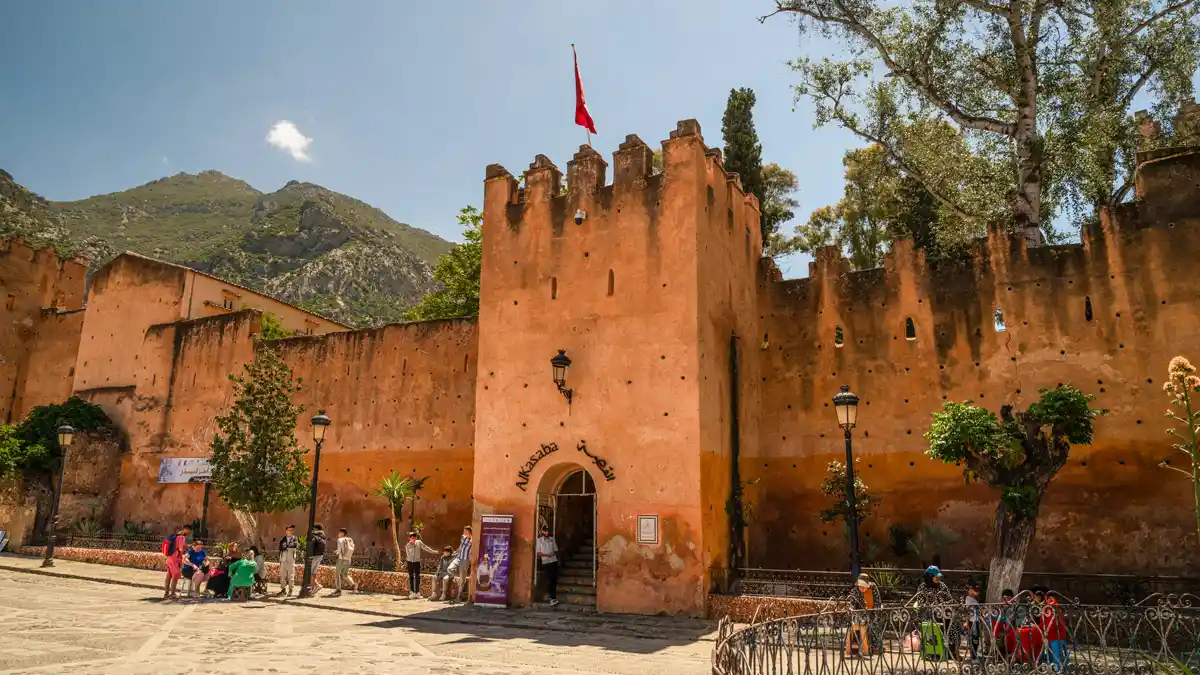
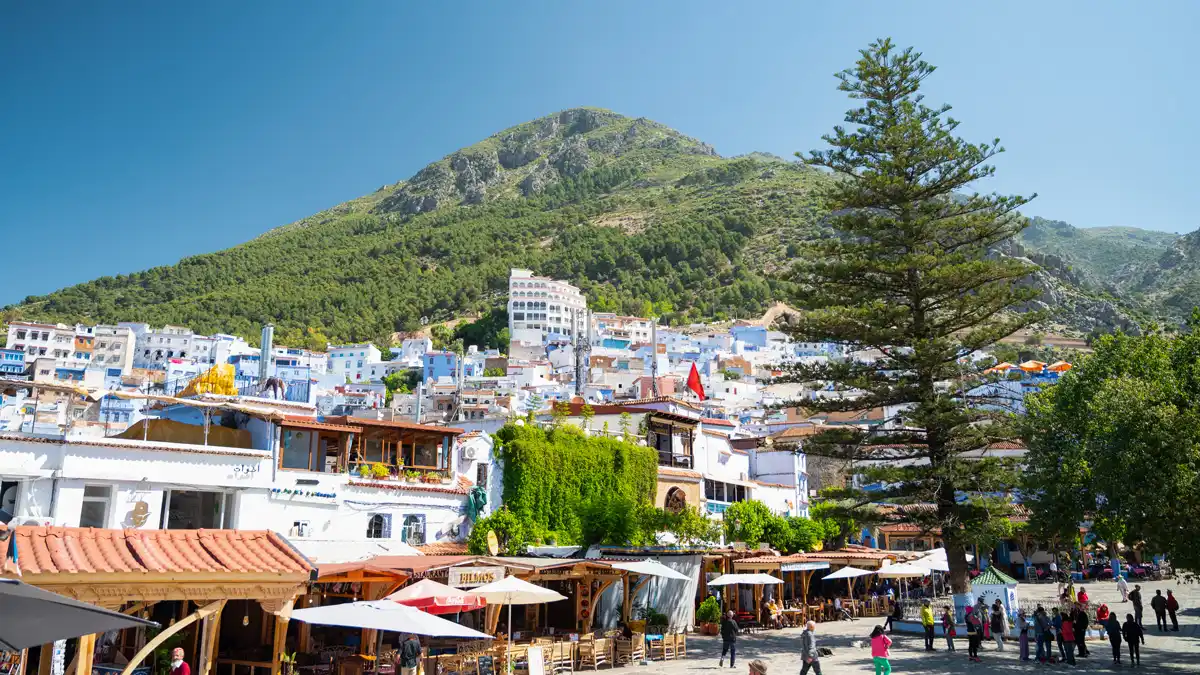
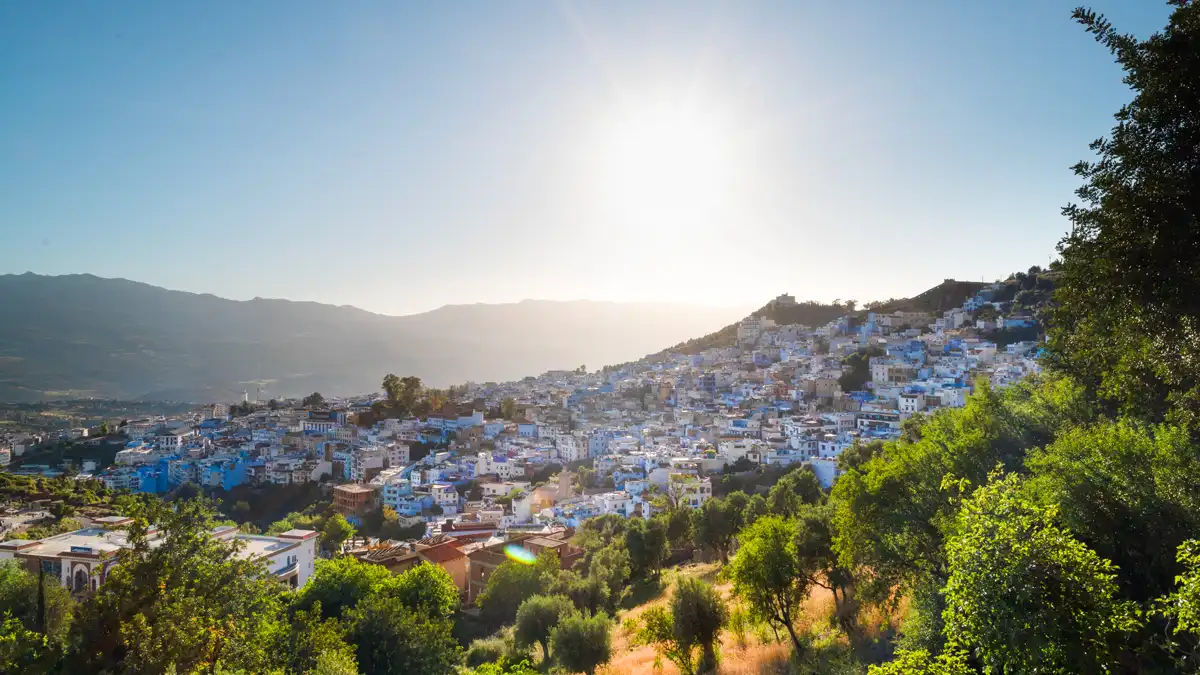
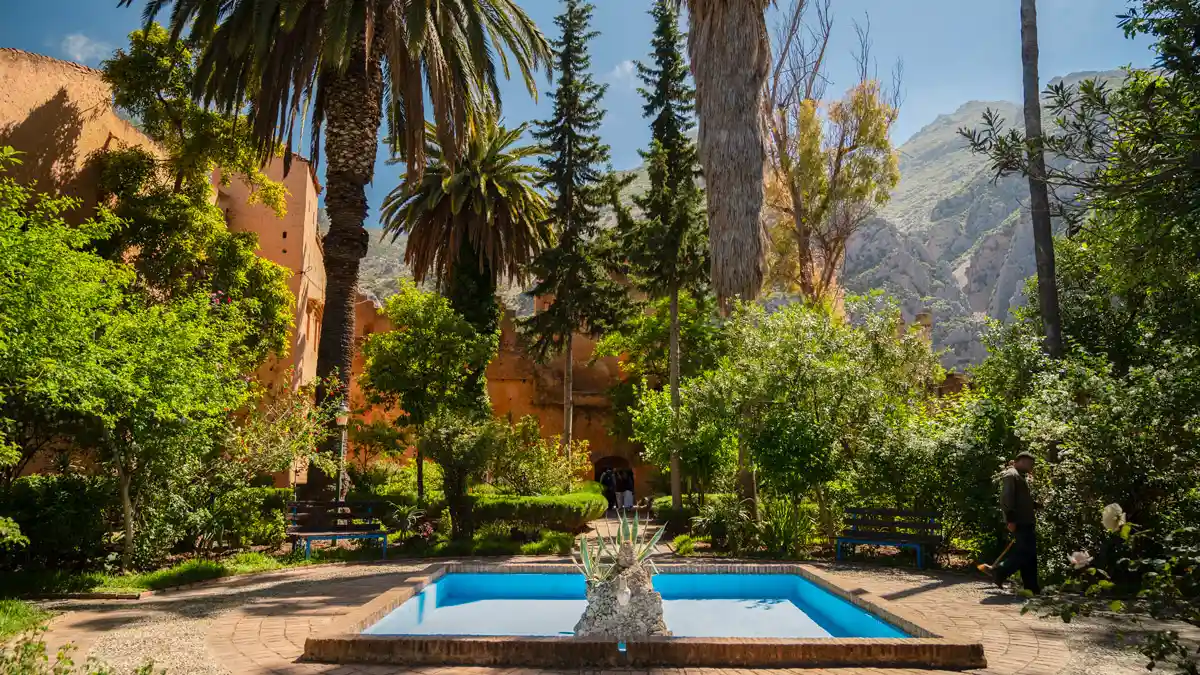
Leave after breakfast and drive north into the Rif Mountains past cork oaks and small farms, with a tea and photo stop on the climb; arrive Chefchaouen around midday and leave the vehicle above the medina, since the lanes are cobbled and stepped; visit the 15th-century Kasbah and its museum; guided walk through the blue medina with a shopping experience at the workshops where local women weave striped blankets and press argan oil; lunch at Ras El Ma, the natural spring at the edge of the medina, where the tagine comes with the sound of running water beside you; late afternoon we recommend the short climb to the Spanish Mosque, about five minutes on foot, timed for sunset, when the light turns the rooftops cobalt and the whole valley opens up; dinner in the medina; overnight in an auberge in Chefchaouen.
Day 11: Chefchaouen to Akchour to Tetouan
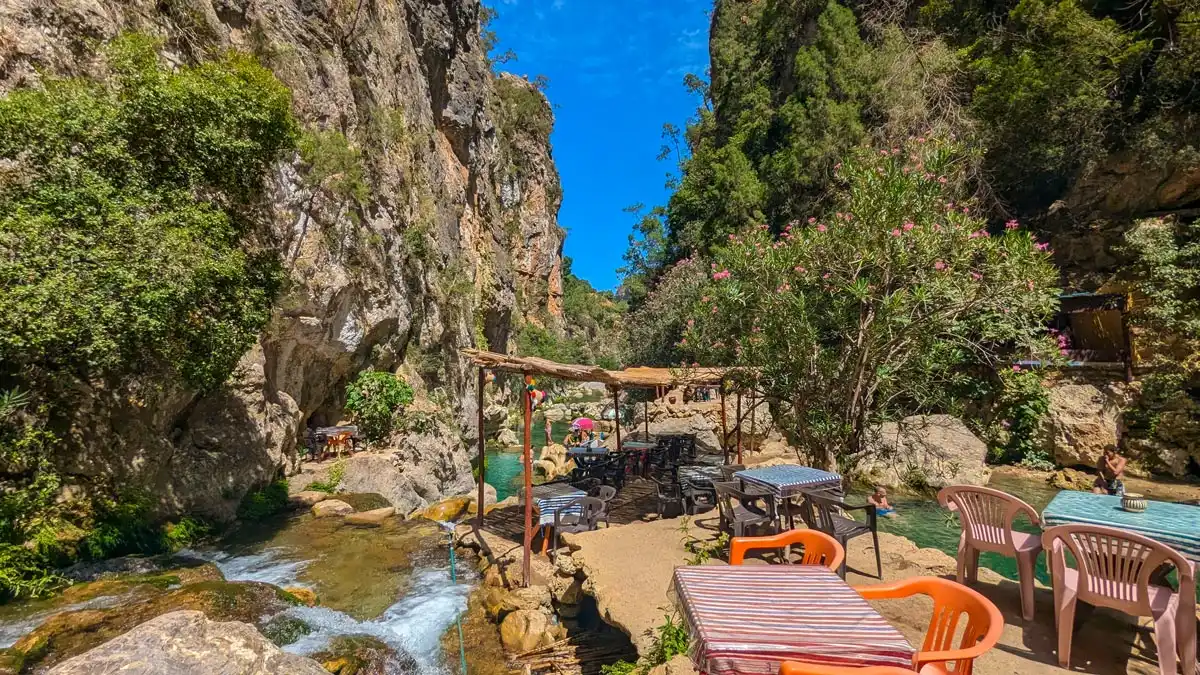
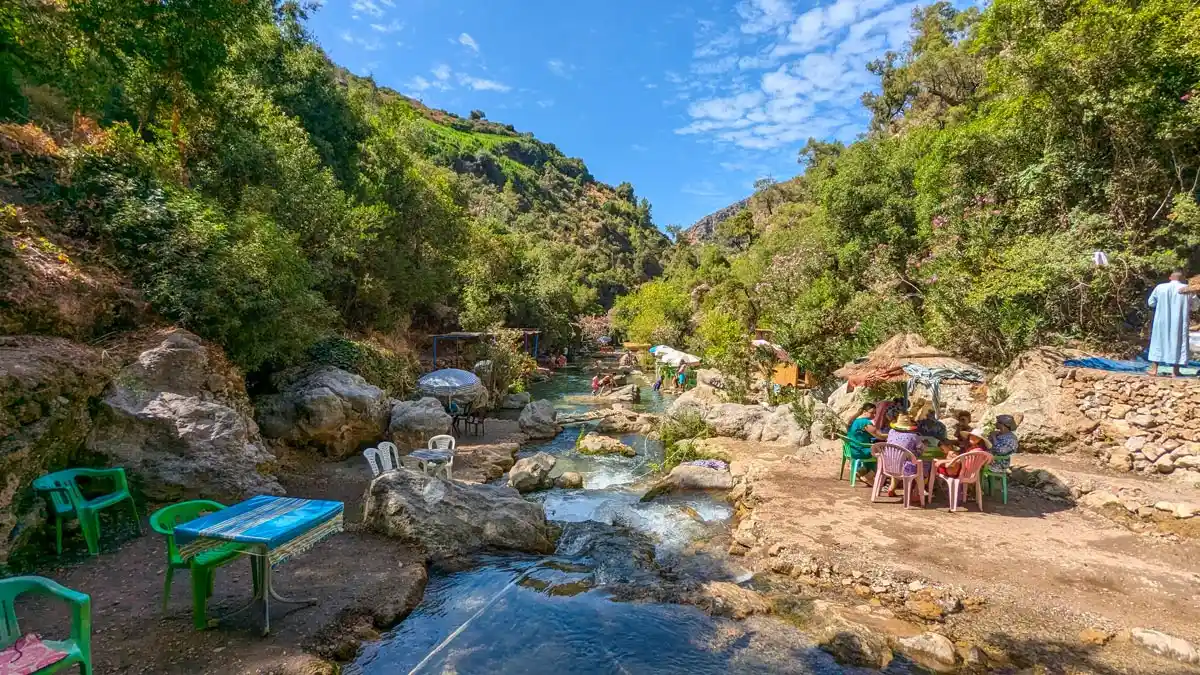
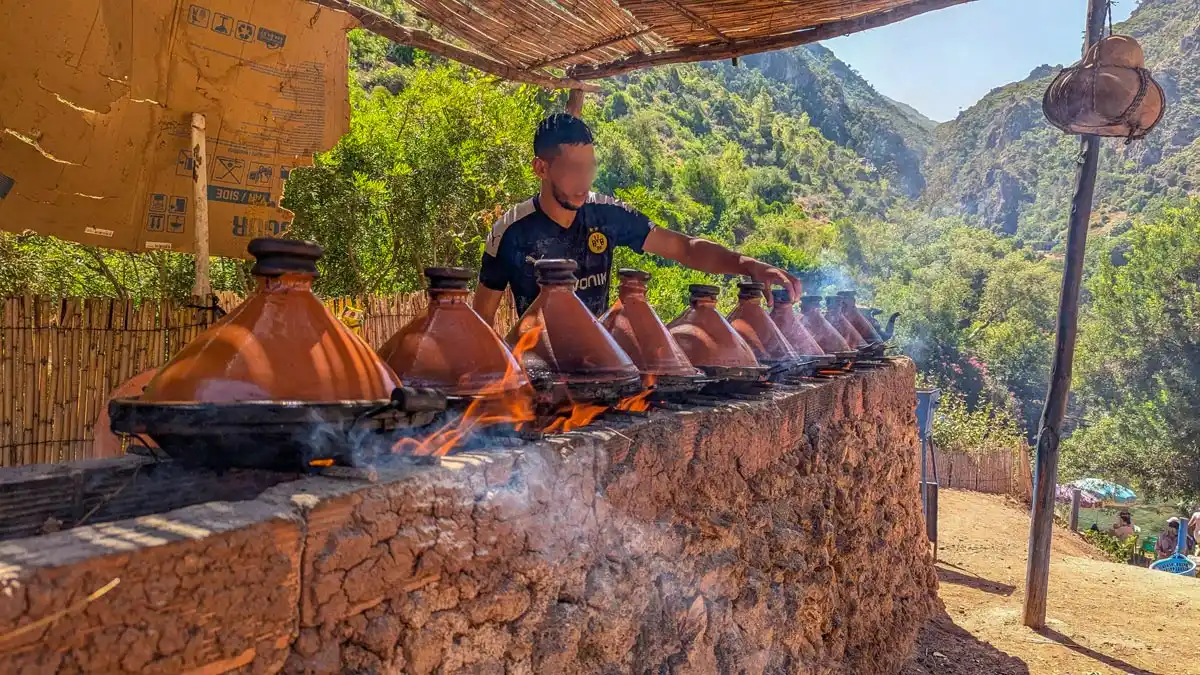
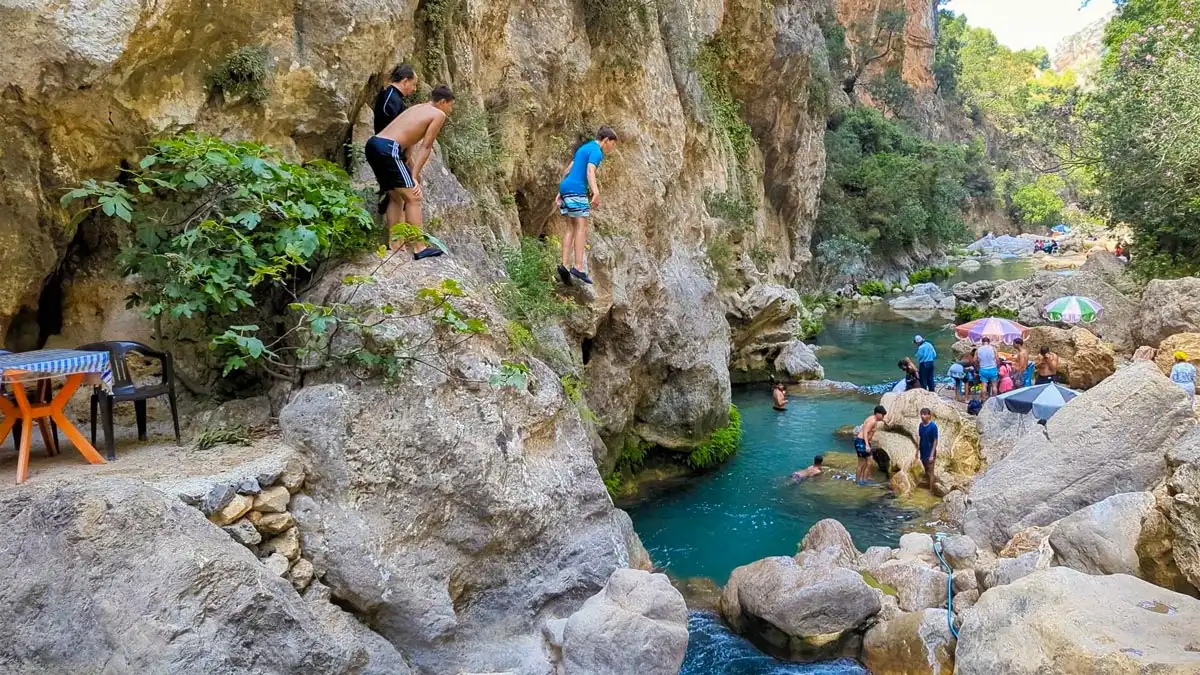
Breakfast at the auberge, then drive deeper into the Rif toward Akchour, with stops on the road for the valley views as the landscape turns green; we recommend pausing in one of the villages on the way to buy bread straight from the community oven, still hot, which is the local way to start a day in the mountains; hike through the Akchour valley to the natural pools fed by the waterfall, a rocky path in places and around two hours round trip; swim in the cold water or sit on the rocks and rest; lunch is tagine and fresh juice served beside the water; return in the afternoon and take the road north to Tetouan; overnight in a riad in Tetouan.
Day 12: Tetouan to Tangier
Breakfast at the riad, then drive up to Tangier; walk the medina, where the Kasbah, Petit Socco and Grand Socco sit within a few minutes of each other, and the Andalusian and Spanish influence in the architecture is clearer here than anywhere else in Morocco; lunch in the medina; afternoon on the Mediterranean shore, a swim if the weather allows, otherwise a walk along the corniche; we recommend the late afternoon for this, because the light across the strait toward Spain is best in the last hours; overnight in a hotel in Tangier.
Day 13: Tangier to Rabat
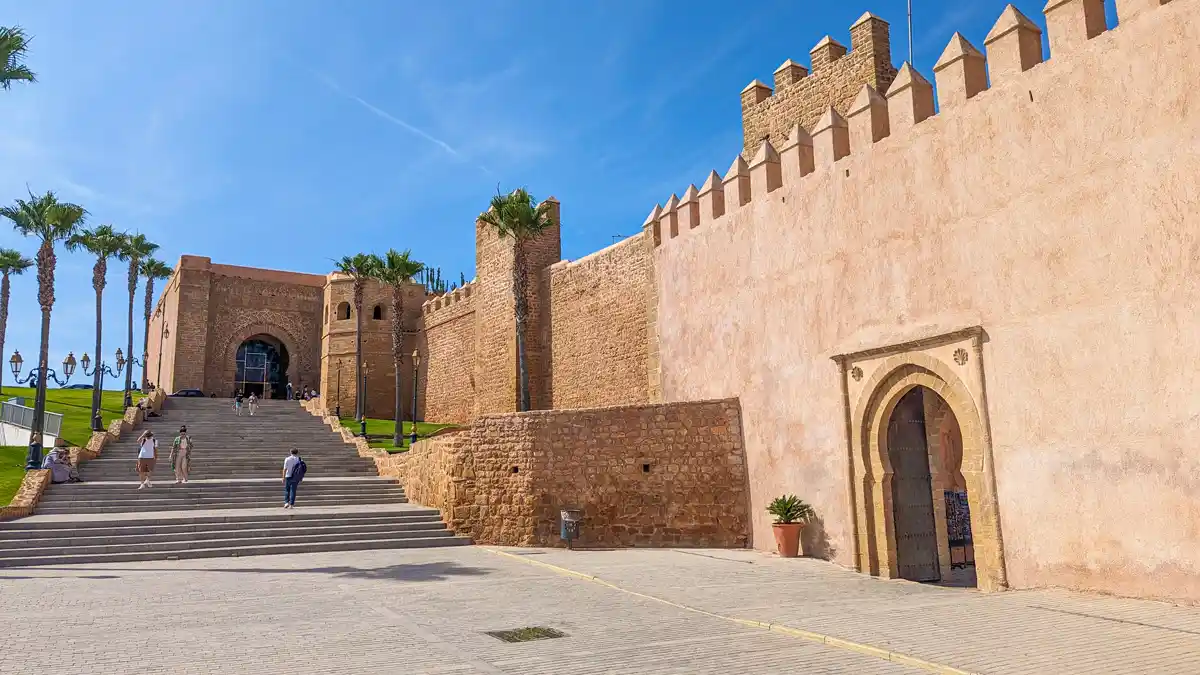
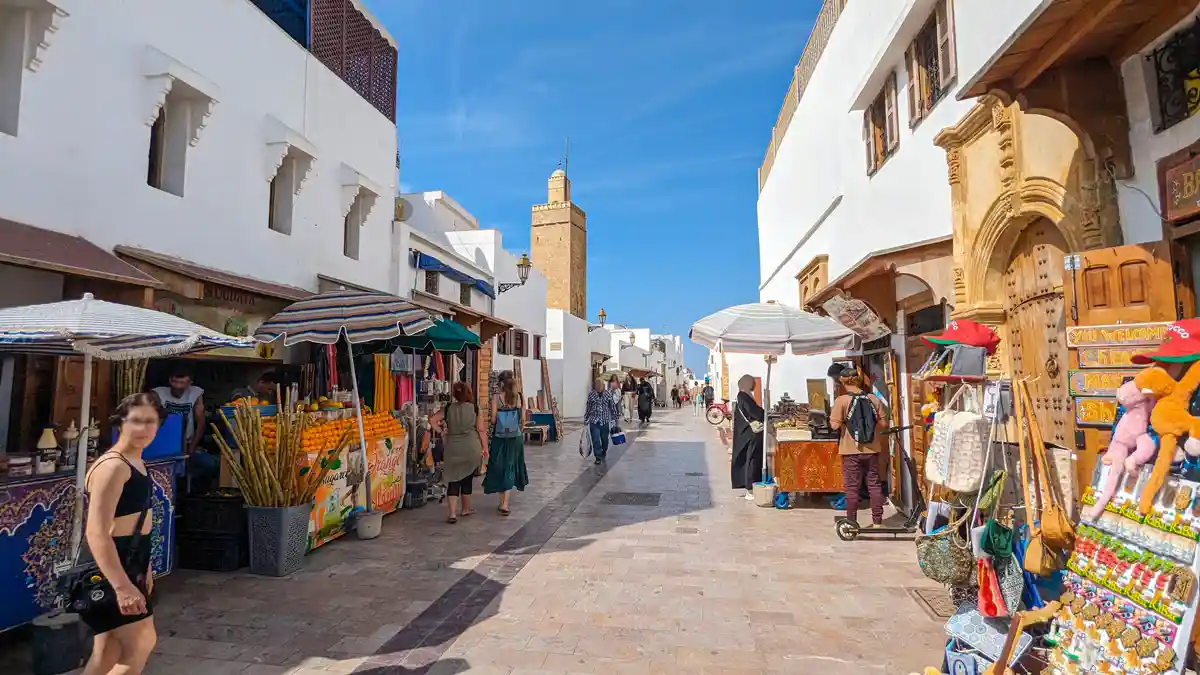
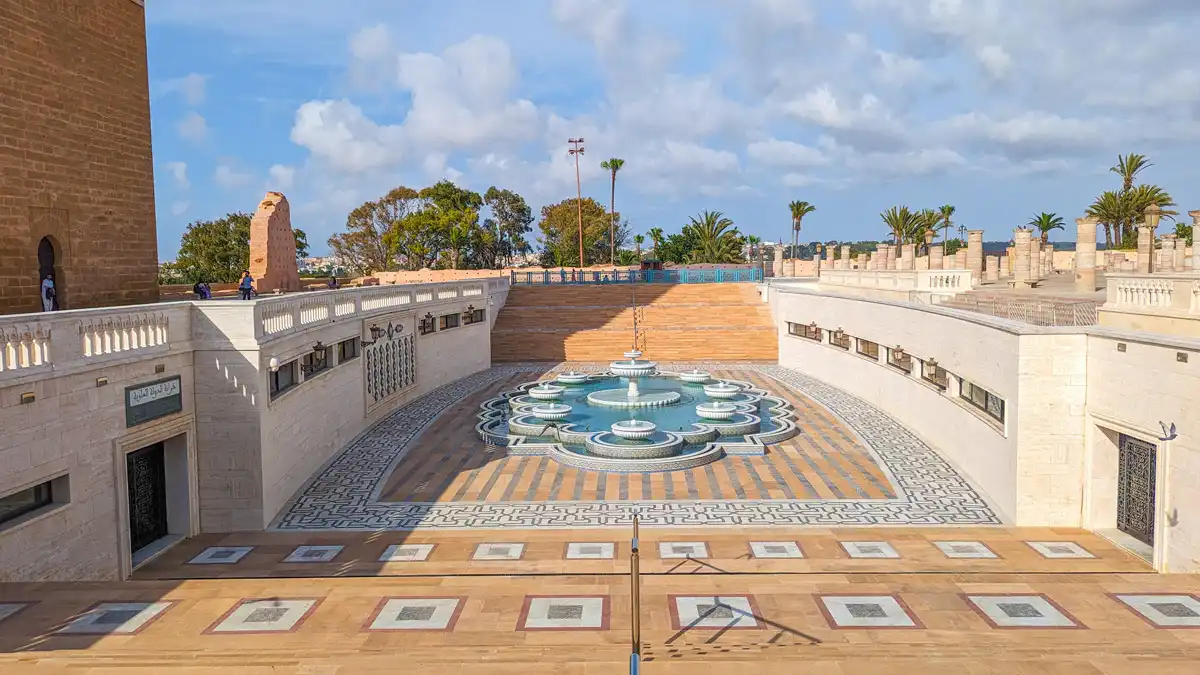
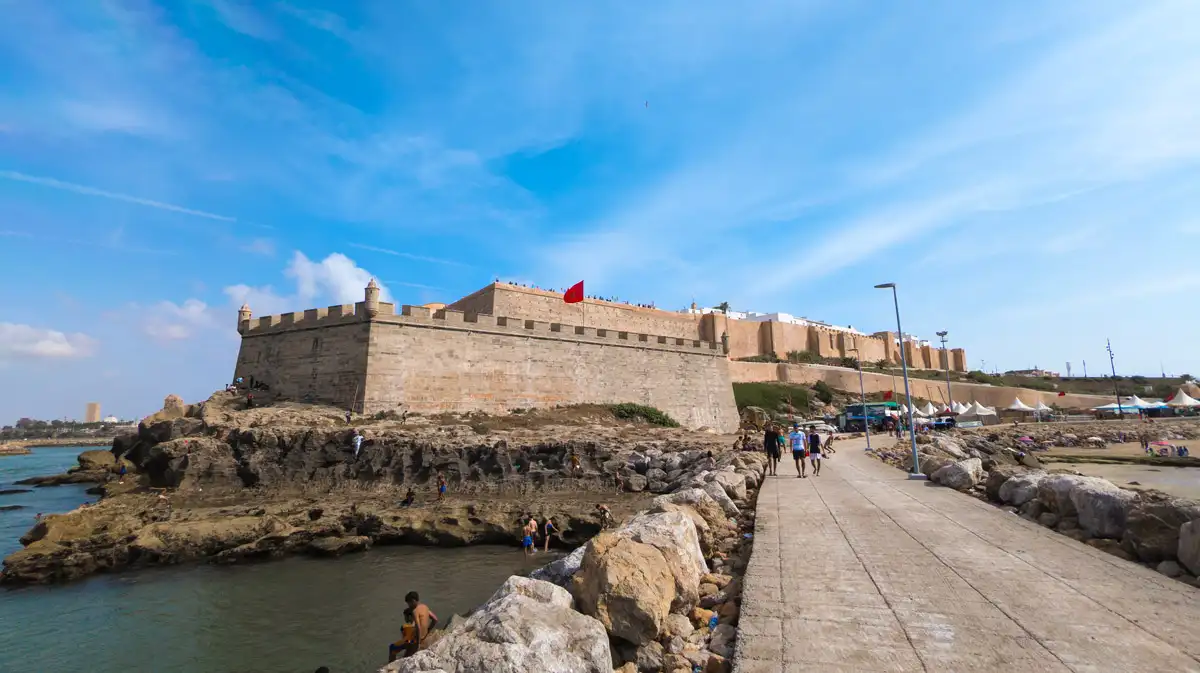
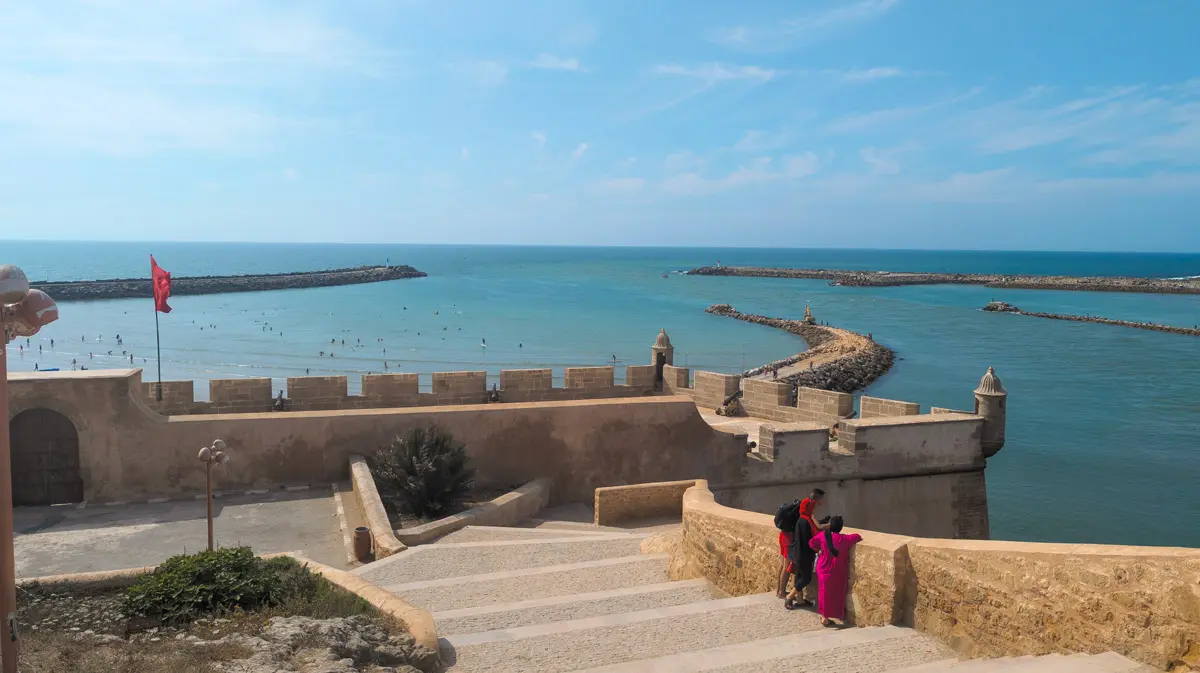
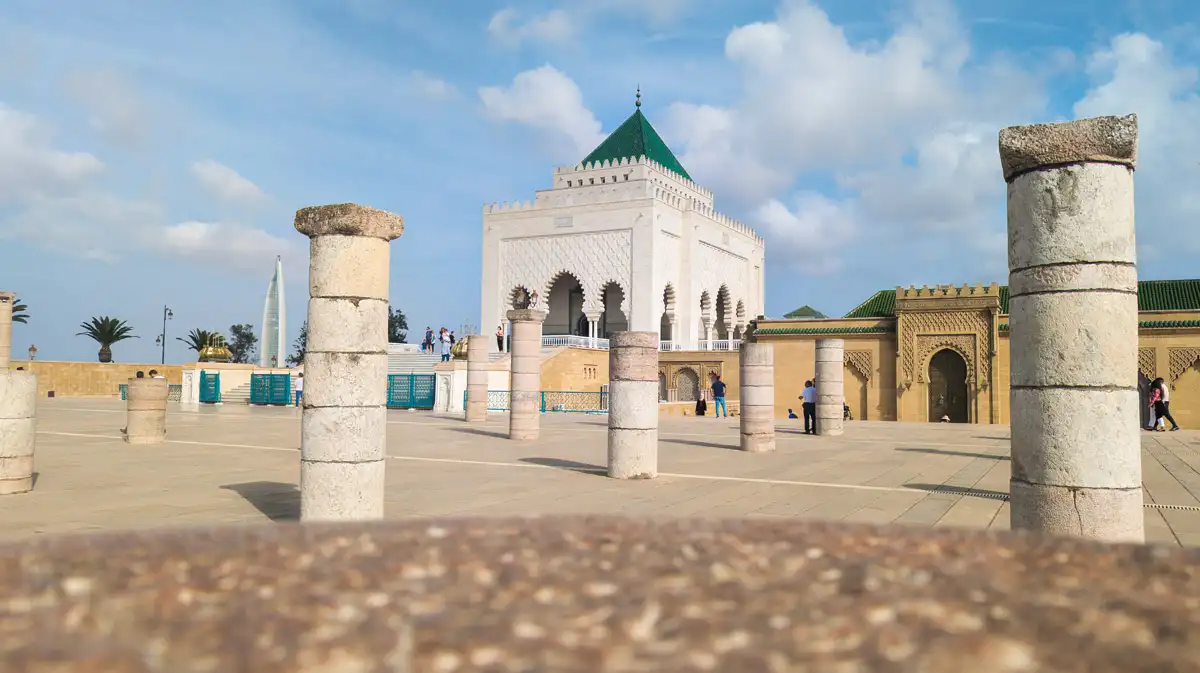
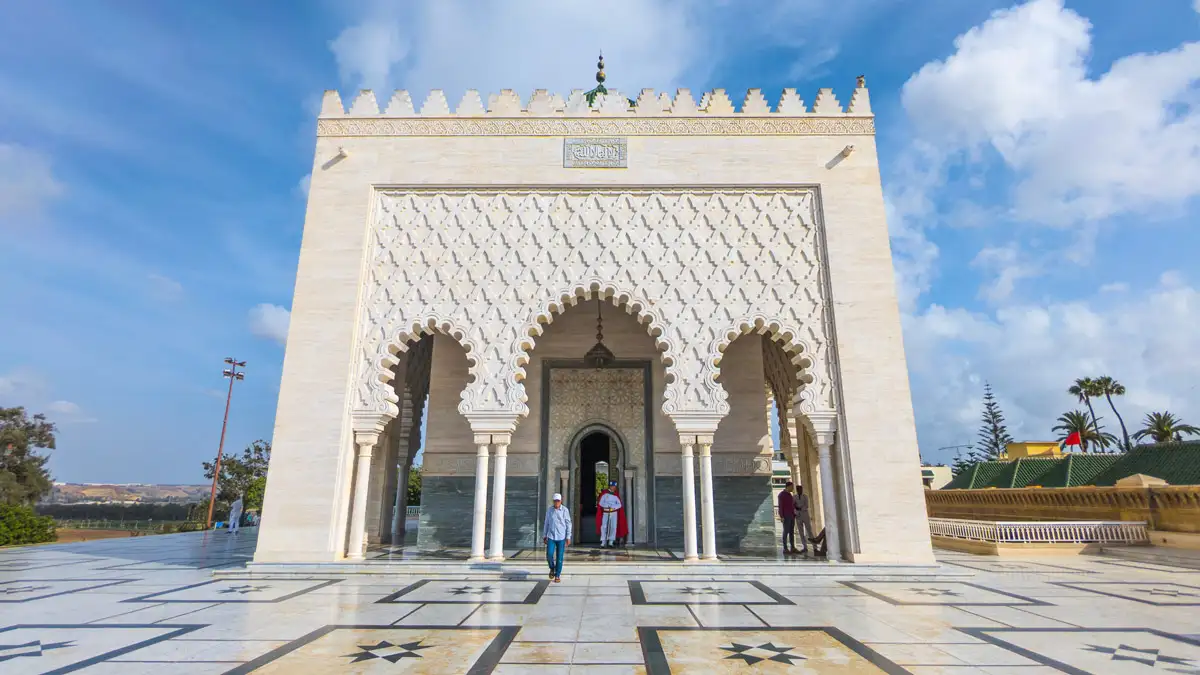
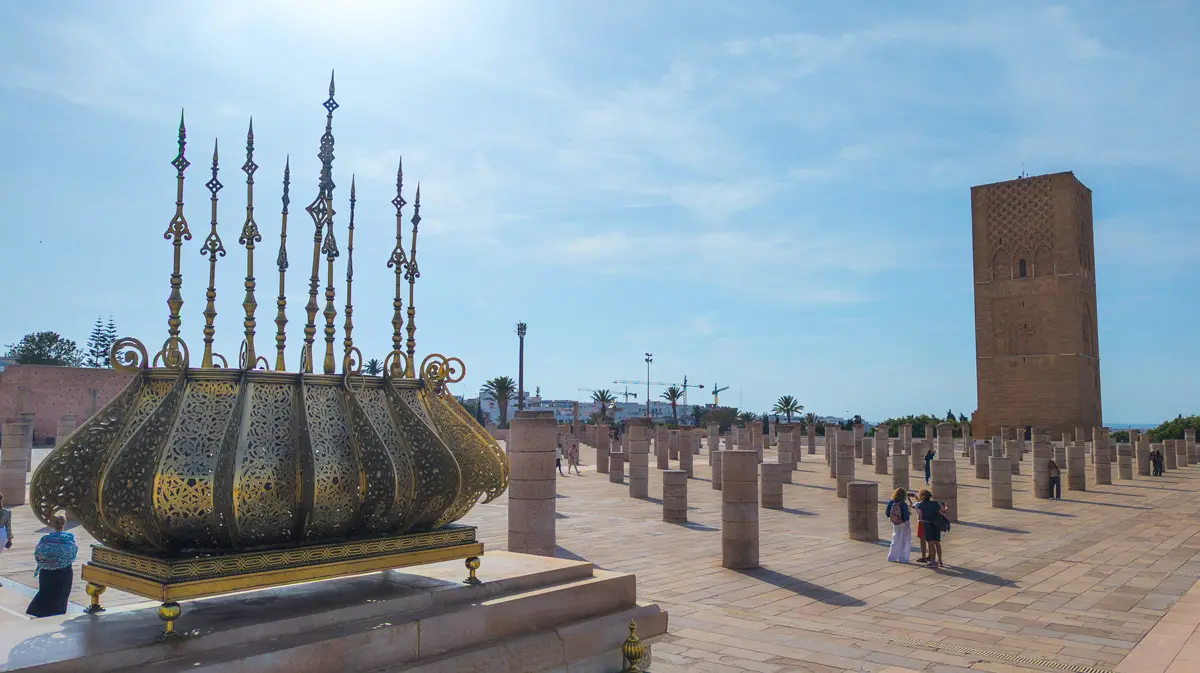
Breakfast in Tangier, then take the coast road south to Rabat; visit the Hassan Tower, the minaret of a mosque begun in the 12th century and abandoned unfinished, with the columns of the prayer hall still standing in rows; alongside it the Mausoleum of Mohammed V, worked in onyx, zellij and carved cedar; walk the Kasbah of the Udayas, the 12th-century fortress whose white and blue lanes look out over the mouth of the Bou Regreg; finish at Chellah, a Roman town that later became a Marinid necropolis, so the two layers sit one on top of the other in the same walls; lunch in Rabat; overnight in a riad in Rabat.
Day 14: Rabat to Casablanca to Marrakech
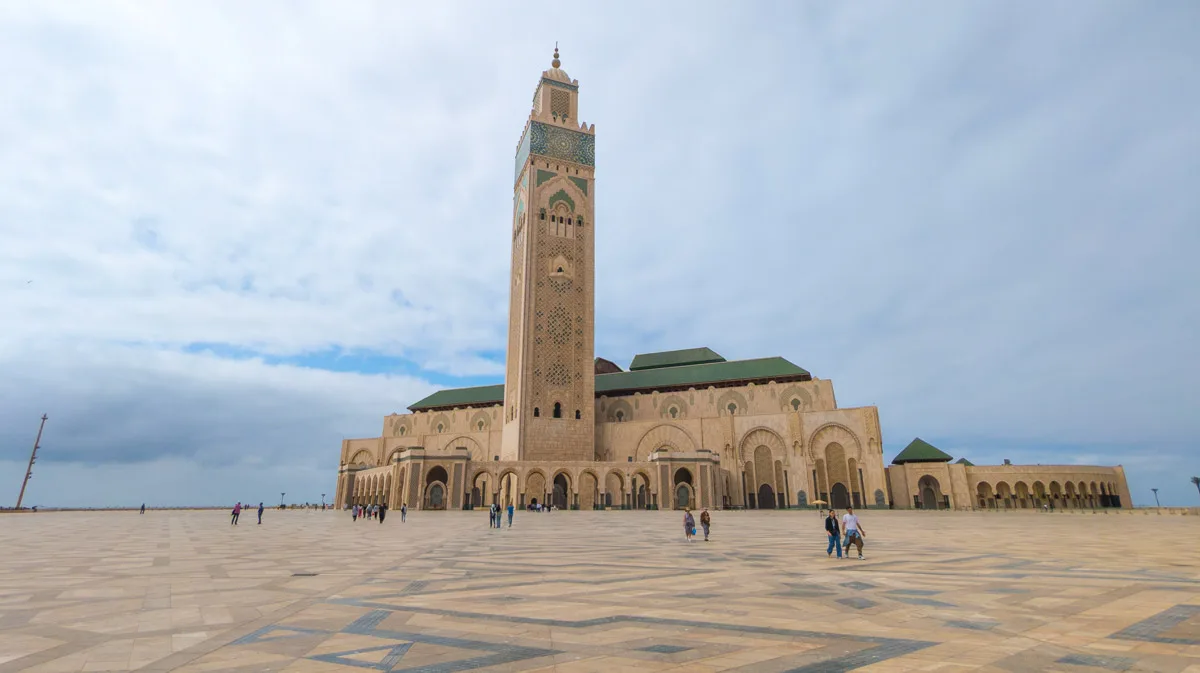
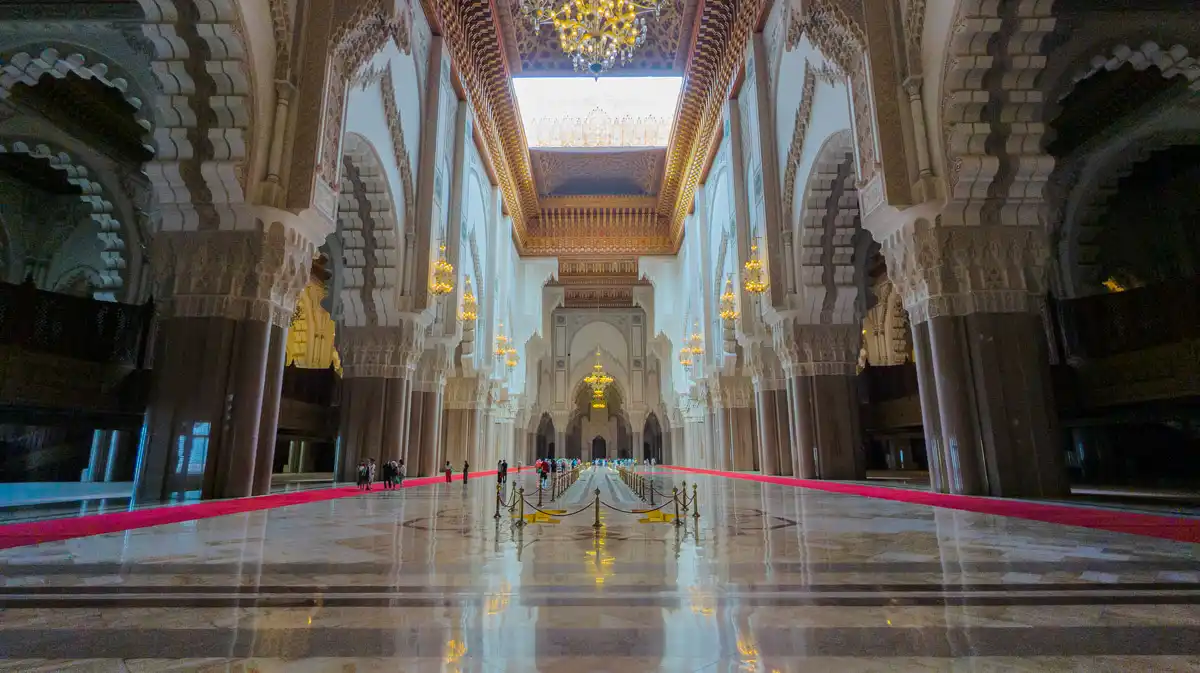
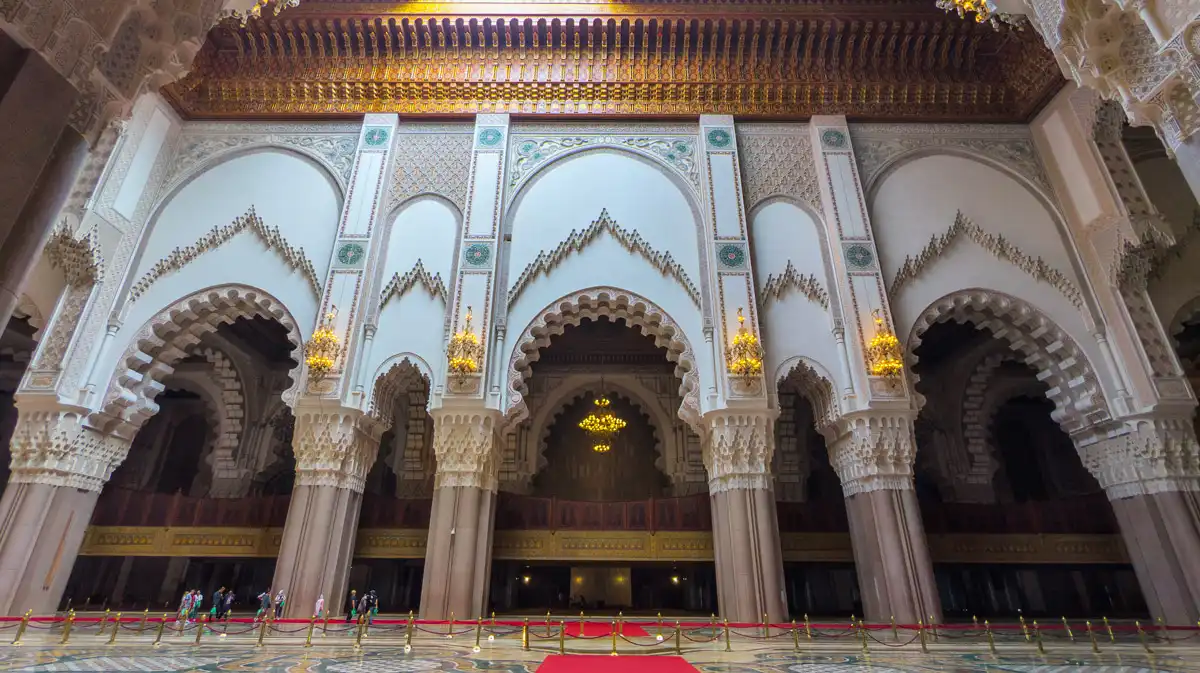
Drive to Casablanca for a guided visit to the Hassan II Mosque, the only mosque in Morocco open to non-Muslim visitors, built out over the Atlantic with a 210-metre minaret; we recommend the morning visit, because the light comes through the glass floors over the water at its best then; walk on the sand afterwards, or swim if the weather is right; lunch on the coast; take the road south to Marrakech, arriving in the evening for drop off at your hotel or the airport; tour ends.
Excluded:
Pickup: From your hotel or Riad.
Drop off: in your hotel/Riad or at the airport.
Longest drives: Day 6 (Merzouga to Fez, 7 to 8 hours) is your only full travel day with no sightseeing. Charge your devices, download offline entertainment, and pack snacks from Merzouga. Your driver knows every good stop along the way. Days 13 and 14 involve back-to-back driving of 3.5 and 5 hours respectively; manageable but worth knowing before the final stretch.
Desert camp packing: For your two nights in the dunes, pack a small backpack with essentials: toiletries, headlamp, change of clothes, and a warm layer. Your main luggage stays secured in the vehicle. Our Sahara packing list covers everything you need.
Camel ride comfort: The saddle is a wooden frame with blankets. Wear long loose trousers and closed-toe shoes. The sunset trek lasts about 90 minutes. If you would rather not ride, you can follow in the 4WD support vehicle, just let us know in advance.
Desert temperatures: Nights drop to 5 to 10°C even in shoulder months and near freezing in winter. The camp provides heavy blankets but an extra fleece is wise. See our month-by-month Sahara weather guide for realistic expectations.
Tizi-n-Tichka pass (Day 3): The road climbs to 2,260 metres with plenty of switchbacks. If you are prone to motion sickness, take a tablet before the drive. Bring small cash for the mineral and fossil stalls near the summit. The air is noticeably cooler at the top even in summer, keep a jacket within reach.
Todra Gorge (Day 4): You will walk at the river’s edge inside the gorge. Sturdy sandals or light hiking shoes are ideal. The temperature drop inside the canyon is sharp even on hot days.
Chefchaouen medina (Day 10): Leave the vehicle above the medina since the lanes are cobbled, stepped, and too narrow for cars. The climb to the Spanish Mosque is five minutes on foot and the best sunset on this route. Comfortable walking shoes are essential.
Akchour Valley hike (Day 11): The path to the natural pools is rocky in places and takes about two hours round trip. Wear sturdy shoes you can get wet and bring a towel and change of clothes if you plan to swim. The hike is not technical but is uneven underfoot throughout.
Tetouan medina (Day 11 afternoon): Tetouan’s UNESCO medina is less visited than Fez or Marrakech, which means fewer tourist-facing shops and more working neighbourhood. One of the most authentic medina walks on this route.
Tangier and the Mediterranean (Day 12): The afternoon at the Mediterranean shore depends on season. March to May and September to November give the most comfortable sea temperatures. The Strait of Gibraltar view from the corniche is best in late afternoon light. If the weather is poor, Cap Spartel and the Caves of Hercules make a strong alternative.
Hassan II Mosque (Day 14): The mosque is open to non-Muslim visitors but shoulders and knees must be covered. Carry a light scarf for extra coverage if needed. Morning is the right slot, the light comes through the glass floors over the Atlantic at its best then.
Cash: ATMs are scarce between Merzouga and Fez. Withdraw enough dirhams in Marrakech for tips, snacks, and optional desert activities. Top up again in Fez before heading north. Cards work in larger hotels but souks, desert camps, and mountain stops are cash only.
Dietary needs: Tell us in advance if you are vegetarian, vegan, or have allergies. Most stops can accommodate, but some remote camps and mountain auberges need notice ahead of arrival.
You’ll travel in a private, air‑conditioned 4WD or spacious minivan, late‑model Mercedes, Toyota, or similar, kept very clean and serviced regularly. Your driver is a licensed Moroccan professional with years of experience on mountain passes and Saharan pistes. Friendly, attentive, and discreet, they know every fuel stop, every viewpoint, and exactly how to pace the journey so you feel safe, comfortable, and never rushed.
Infant seats and baby cribs are available upon request — please reach out and request them in advance.
Free cancellation up to 14 days before your tour starts. If you cancel within 14 days, you’ll receive a full refund minus a 20% fee.
When you travel with us, your money stays in the places you visit: the desert villages, the mountain towns, the medina workshops, and the family-run businesses that make each city what it is.
Family-run riads and desert camp: your nights in Marrakech, Fez, Chefchaouen, Tetouan, and Rabat are at locally owned riads managed by families we have worked with for years. In Merzouga, the desert camp is run by an Amazigh family who have lived beside the dunes for generations.
Local guides and drivers: every guide, driver, and camel handler you meet on this tour is from the region they show you. They earn fair wages, and we never use commission-based shopping stops.
Amazigh communities in the south: on Day 5 you visit nomad families in the desert who move with the seasons. We arrange these visits respectfully, with direct payment to the family. No staged setups.
Akchour valley: lunch on Day 11 is at a family-run spot beside the water. Your meal directly supports a small business in a part of the Rif that sees far less tourism than the coast or the imperial cities.
Artisan cooperatives: when you buy pottery, carpets, leather, or wool blankets along the route, we guide you to workshops run by local craftsmen and women-led cooperatives in Fez, Chefchaouen, and Marrakech.
This is how we have always run our tours. And it means that after your two weeks in Morocco, you have left something real behind.
If you have questions about this tour, want to customize it, or simply need help making your booking, we’d be happy to help. Just reach out to us through
We’ve spent years helping travelers explore the Morocco and have created an extensive library of practical guides covering everything from desert camps and weather to routes, packing, safety, local culture, and itineraries. If you still have questions before booking, our Guides will help you understand exactly what to expect and plan your trip with confidence.

![a man alone on a sand dune in the sahara desert morocco]](https://test.mementomorocco.com/wp-content/uploads/2024/09/lonely-walker-in-sahara-desert-merzouga-person-mor-2023-11-27-05-01-56-utc.webp "lonely-walker-in-sahara-desert-merzouga-person-mor-2023-11-27-05-01-56-utc")